
Massage for psoriatic arthritis
Massage for psoriatic arthritis can ease stiffness around sore joints. It supports your rheumatologist's plan, with no friction on plaques or tendons.
By The Renu lymphatic and massage team · 5 min read
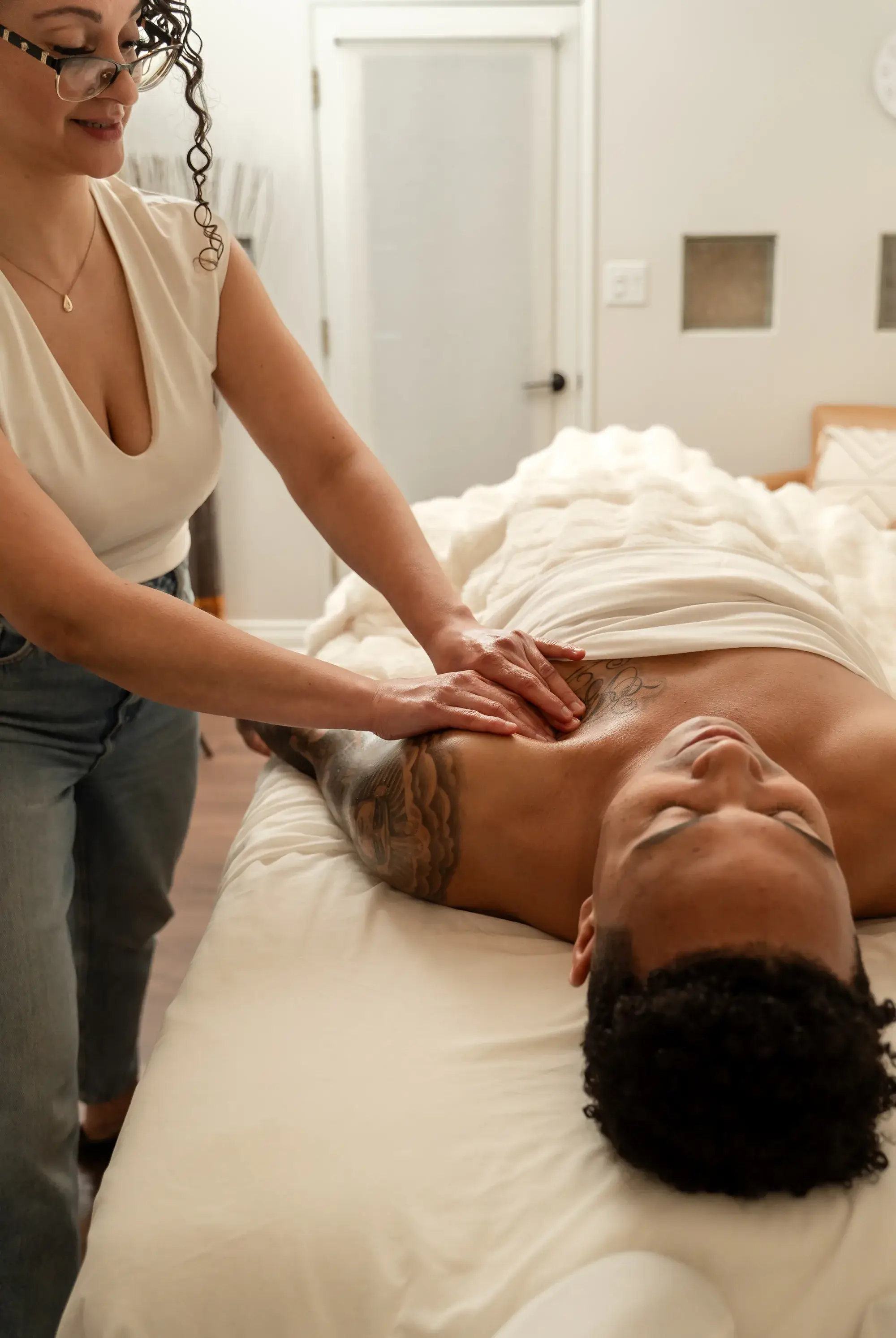
Massage for psoriatic arthritis is a comfort measure that sits beside the medicines and exercise your rheumatologist and physiotherapist prescribe; it does not slow joint damage, and studies of massage in this condition are notably absent. It can ease morning stiffness and the muscle tension that builds around painful joints. We adapt it in two ways specific to this condition: no deep friction over inflamed tendon attachments such as the heel, and no rubbing, scraping or cupping over psoriasis plaques.
Massage for psoriatic arthritis can make stiff, guarded muscles around sore joints feel easier, and it can be a calm hour in a condition that is often tiring to live with. It does not change the course of the disease. A 2020 review of complementary therapies in psoriatic arthritis found that studies of massage, one of the most commonly used, were conspicuously absent. So we treat it as comfort care, adapted to the three tissues this condition affects: joints, tendon attachments and skin.
What psoriatic arthritis looks like
Psoriatic arthritis is an inflammatory arthritis linked to psoriasis. Arthritis Society Canada notes that up to a third of people with psoriasis develop it, compared with less than 1 percent of the general Canadian population. The NHS notes it can begin many years after psoriasis first appears.
The NHS lists the main features:
- pain, swelling and stiffness in one or more joints
- swollen fingers or toes
- nail changes, such as pitting or colour change
- low energy
- symptoms that are often worse in the morning and ease with movement
Two features set it apart from other kinds of arthritis, and both change how we work. Dactylitis is swelling of a whole finger or toe, often called a sausage digit. Enthesitis is inflammation where tendons and ligaments attach to bone; Arthritis Society Canada names the back of the heel, the sole of the foot, the sides of the elbows and the outer hips as common sites. A 2018 review described enthesitis as an early feature of psoriatic arthritis that is associated with higher disease activity and poorer quality of life.
What the evidence does and does not say
There is no trial evidence for massage in psoriatic arthritis, and we would rather tell you that plainly. Even physiotherapy and exercise have less research here than in rheumatoid arthritis or axial spondyloarthritis; a 2021 review described the evidence as still lacking, while noting studies that suggest benefits for function, pain and quality of life.
What we can say is practical:
- Massage is low risk when it respects inflamed tissue and skin.
- It can relax the muscles that tighten to protect a painful joint.
- Its calming effect may help on days when pain and fatigue wear you down.
- It does nothing to prevent joint damage, which is why the medicines matter.
If your question is about other forms of arthritis, our pages on rheumatoid arthritis, ankylosing spondylitis and hand osteoarthritis cover their differences.
Working with your rheumatologist’s plan
Medicines are the main treatment, according to the NHS: anti-inflammatories for milder symptoms, steroid injections, disease-modifying anti-rheumatic drugs (DMARDs) that can take several months to work, and biological medicines when others have not helped. Physiotherapists teach strengthening exercises, and occupational therapists suggest changes at home and work.
The NHS self-care advice is worth keeping in view:
- low-impact exercise such as swimming, walking and yoga
- losing weight if you carry extra, to take pressure off joints
- not smoking
- avoiding herbal remedies, which may interfere with your medicines
That last point applies on the table too. If you are offered a product with herbal ingredients, you can say no; plain, unscented lubricant is fine.
How this works at Renu
A session starts with a short conversation about which joints, tendons and patches of skin are active this week, then we plan around them.
| Area | How we adapt |
|---|---|
| Inflamed tendon attachments (heel, sole, elbow, outer hip) | No deep friction or pressure on the attachment; we work the muscle belly above it gently |
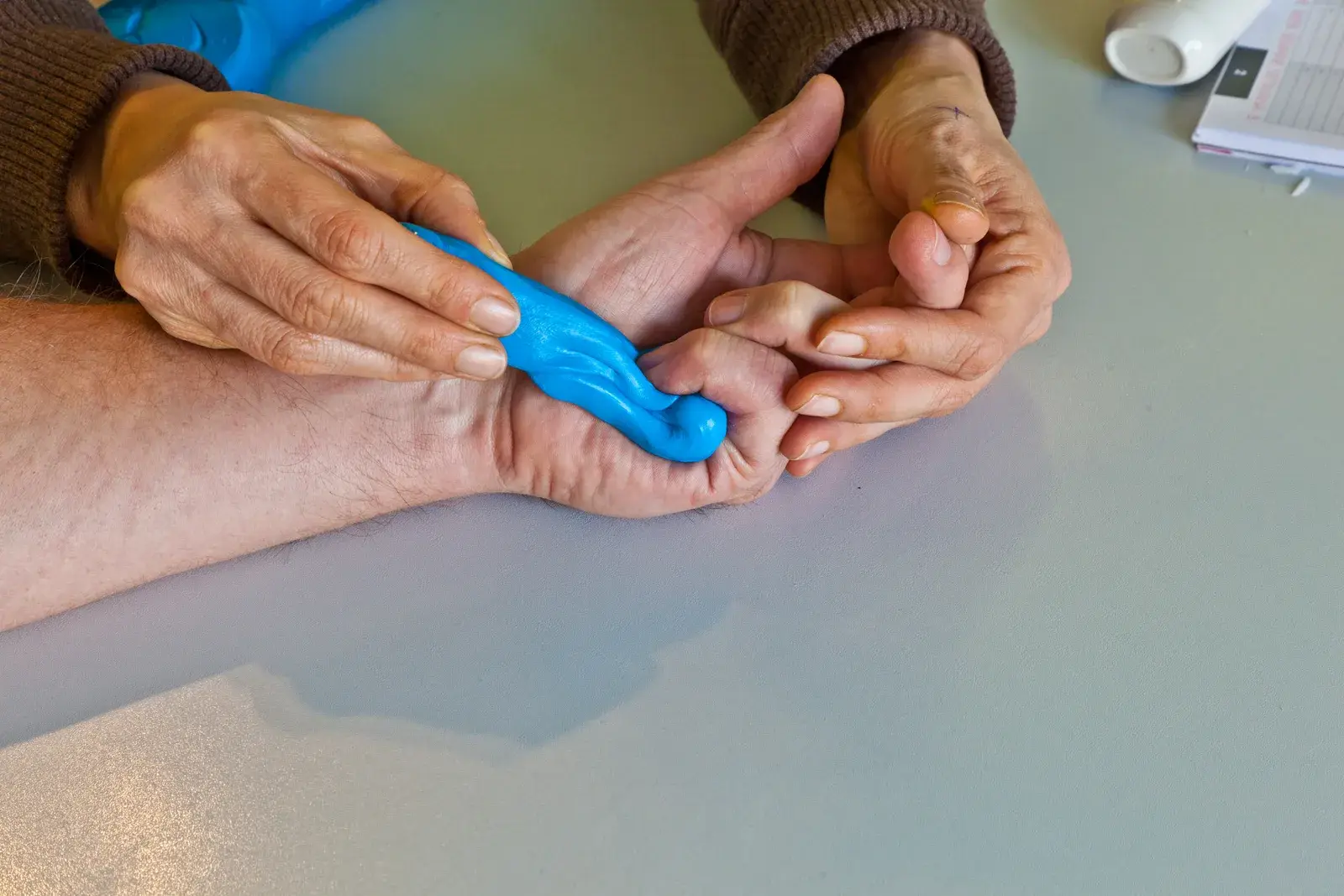
| Swollen finger or toe | Left alone; we work the forearm, hand or calf around it |
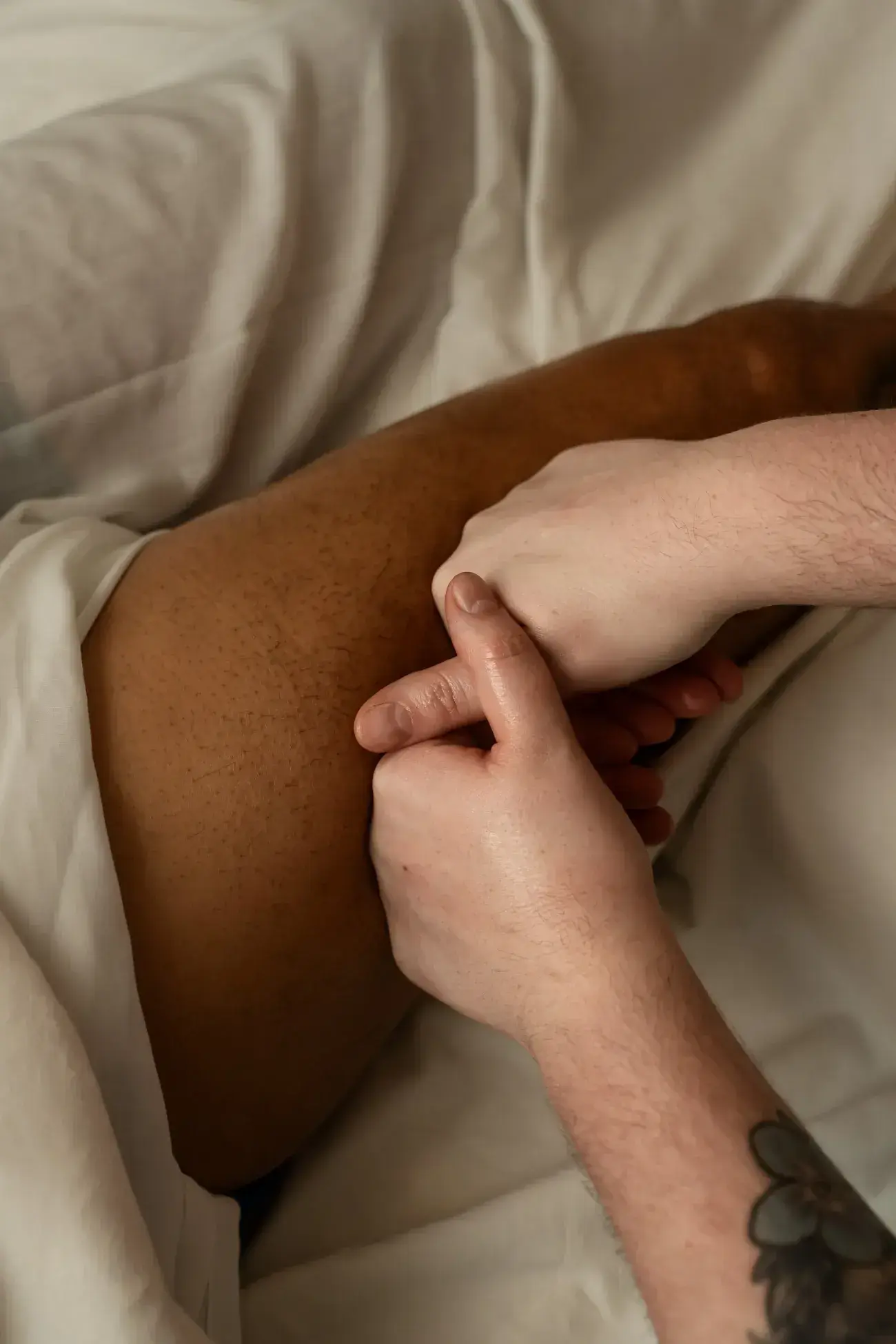
| Psoriasis plaques | No friction, scraping, scrubbing or cupping; broken or cracked skin is avoided |
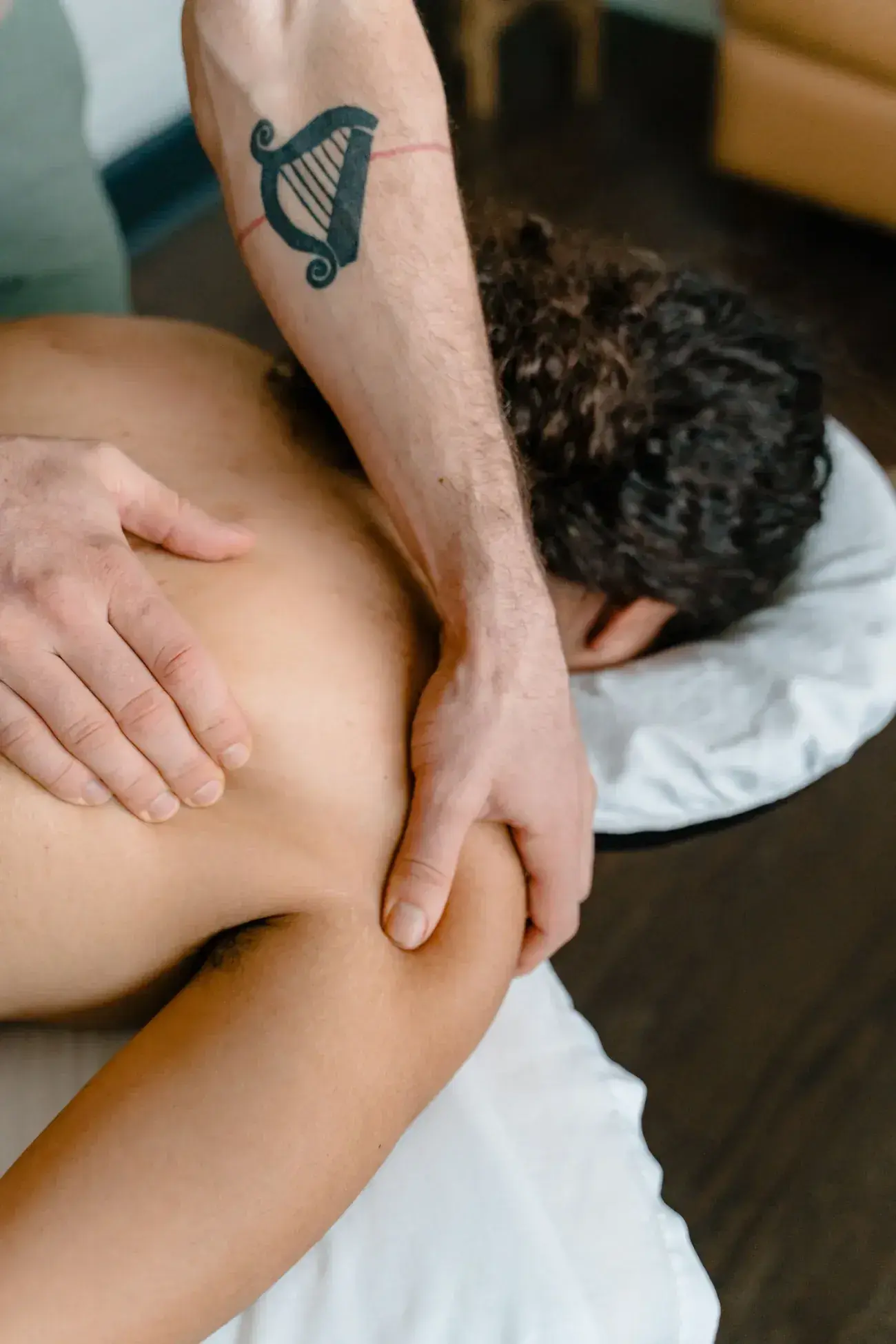
| Stiff neck, back and hip muscles | Broad, moderate strokes and gentle movement |
Morning stiffness tends to settle as the day goes on, so a later appointment may feel better. Massage therapy with our Registered Massage Therapists is $80 for 30 minutes, $100 for 45 and $120 for 60, booked through Jane any day of the week. If you have psoriasis and wondered about cupping, our answer on cupping with eczema or psoriasis covers it.
What to tell us before your first session
A few details help us plan a session that respects joints, tendons and skin at once:
- which joints are swollen or stiff this week, and which are quiet
- any tender spots at tendon attachments, such as the back of the heel or the outside of the elbow
- where your psoriasis is active, including the scalp and hairline if you would like head or neck work
- whether your nails are affected, since nail changes can sit alongside enthesitis
- the medicines you take, including any new biological treatment
- the exercises your physiotherapist has given you, so we can avoid working against them
Nothing on that list rules out a massage. It simply tells us where to slow down and where to stay away.
When to see your doctor first
See your doctor or rheumatologist if joint pain, stiffness and swelling keep coming back and nobody has looked at them yet; the NHS advises this even if you do not have psoriasis. Get urgent medical help, not a massage, if a single joint becomes suddenly and severely painful, hot, red or swollen, especially if you feel unwell or have a fever, since the NHS warns that this can be an infection inside the joint.
Also check with your rheumatology team before booking if you have just started or changed a biological medicine and have any sign of infection, or if a flare is spreading to new joints.
Questions people ask
Can massage make my psoriasis worse?
It can if it injures the skin. The NHS lists cuts, scratches and grazes among the things that can trigger psoriasis, so we never scrape, scrub or use strong friction over plaques, and we keep pressure off broken or cracked areas.
Should I massage a sausage-like swollen finger?
No. A whole finger or toe that swells up, called dactylitis, is a sign of active inflammation and belongs with your rheumatologist. We work the forearm and hand around it instead, if that feels good.
Is massage a good idea while I wait for a new medicine to work?
It can be a reasonable comfort measure in that gap. The NHS notes that disease-modifying medicines can take several months to work, and gentle massage does not interfere with them. Keep your rheumatologist informed if pain is climbing.
Do massage therapists treat psoriatic arthritis?
We do not treat the disease itself. Diagnosis and the medicines that control it come from a rheumatologist, and exercise plans from a physiotherapist; massage sits alongside both for comfort.
Sources
- NHS: Psoriatic arthritis
- NHS: Psoriasis causes and triggers
- Arthritis Society Canada: Psoriatic arthritis
- Kaeley GS et al., Seminars in Arthritis and Rheumatism 2018: Enthesitis, a hallmark of psoriatic arthritis
- Roberts JA, Mandl LA, Current Rheumatology Reports 2020: Complementary and alternative medicine use in psoriatic arthritis patients, a review
- Perrotta FM et al., Rheumatology and Therapy 2021: New insights in physical therapy and rehabilitation in psoriatic arthritis
- NHS: Septic arthritis
Page reviewed October 5, 2026. This page is education, not a diagnosis. For your own situation, talk to your doctor, surgeon or care team, or ask us.
Keep reading
Related pages