
Massage for cervicogenic dizziness
Massage for cervicogenic dizziness can ease the neck tension behind it, but inner-ear and brain causes must be ruled out first. What helps and what is urgent.
By The Renu lymphatic and massage team · 5 min read
Cervicogenic dizziness is unsteadiness that comes with neck pain, and it can only be diagnosed once inner-ear, brain and blood-vessel causes have been ruled out. Massage cannot make that diagnosis, so see a doctor or vestibular physiotherapist first. Once they have, gentle massage of the upper neck and shoulders can support their treatment, which in trials centred on specific joint glides and vestibular exercises rather than massage.
A stiff, aching neck and a vague, swimmy unsteadiness often arrive together, especially after a rear-end collision, a hard fall on the ski hill or months of long days at a laptop. It is natural to connect the two and look for a neck massage. Sometimes that connection is right. But dizziness has several causes that are more important to catch first, so this is one of the few pages where our honest answer starts with “see someone else first.”
What cervicogenic dizziness is, and why it is diagnosed last
Cervicogenic dizziness means dizziness and imbalance that go along with neck pain and come from a problem in the neck. Clinicians describe it as a diagnosis of exclusion: there are no definitive clinical or laboratory tests, so it is reached only after other causes have been ruled out.
A 2017 diagnostic guide for clinicians lists what has to be excluded first:
- central causes in the brain and peripheral causes in the inner ear;
- vestibular migraine;
- labyrinthine concussion, where a head injury affects the inner ear;
- cervical arterial dysfunction, a problem with the arteries running through the neck;
- whiplash-associated disorder, which overlaps with it.
The NHS notes that inner-ear problems are the most common cause of vertigo. They include benign paroxysmal positional vertigo (BPPV), where specific head movements bring on spinning; labyrinthitis, an inner-ear infection after a cold or flu; vestibular neuritis, inflammation of the balance nerve; and Ménière’s disease. Migraine and some medicines can cause it too.
That list is the reason we do not start with massage. Several of these causes have specific treatments a massage cannot provide, and one or two need urgent care.
What the evidence says about hands-on treatment
The research on manual therapy is small, and it is about joint techniques rather than massage.
| Study | What was tested | What it found |
|---|---|---|
| 2005 systematic review | Manual therapy in 9 studies | All positive, but all of low methodological quality (Level 3 evidence) |
| Double-blind trial, 34 people | Sustained natural apophyseal glides (SNAGs) vs detuned laser placebo | Less dizziness, neck pain and disability, lasting to 12 weeks |
| Randomised trial, 86 people | SNAGs vs passive joint mobilisation vs placebo | SNAGs improved neck range of motion for 12 weeks; neither technique clearly improved balance |
SNAGs are a specific joint technique for the cervical spine, not a massage stroke. A 2000 clinical review concluded that, when correctly diagnosed, cervicogenic dizziness can be treated successfully with a combination of manual therapy and vestibular rehabilitation, the balance retraining that vestibular physiotherapists provide.
So the core treatment sits with a physiotherapist who works with dizziness. Our comparison of massage therapy and physiotherapy in Alberta explains how the two professions divide that work.
Where massage fits once you have a diagnosis
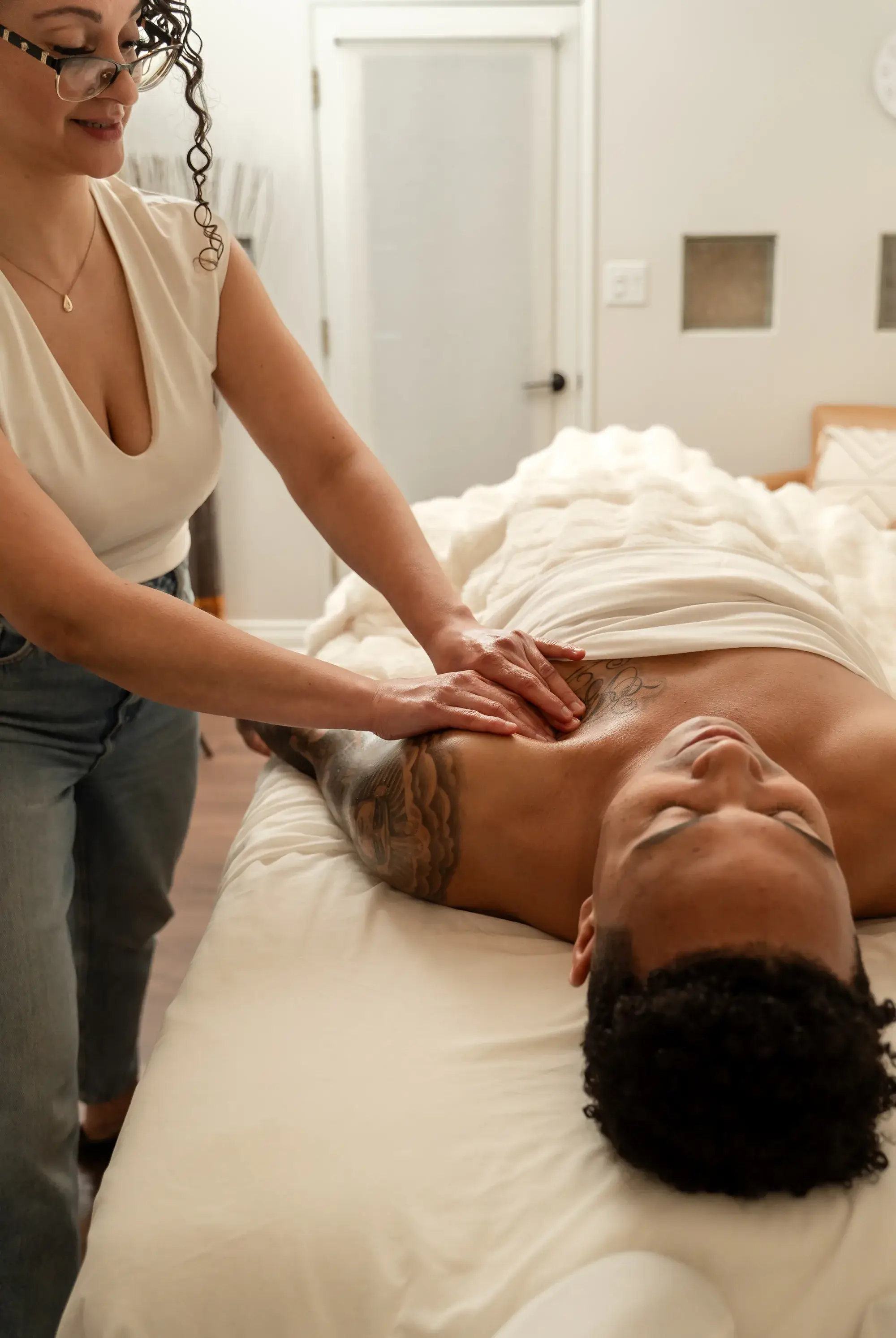
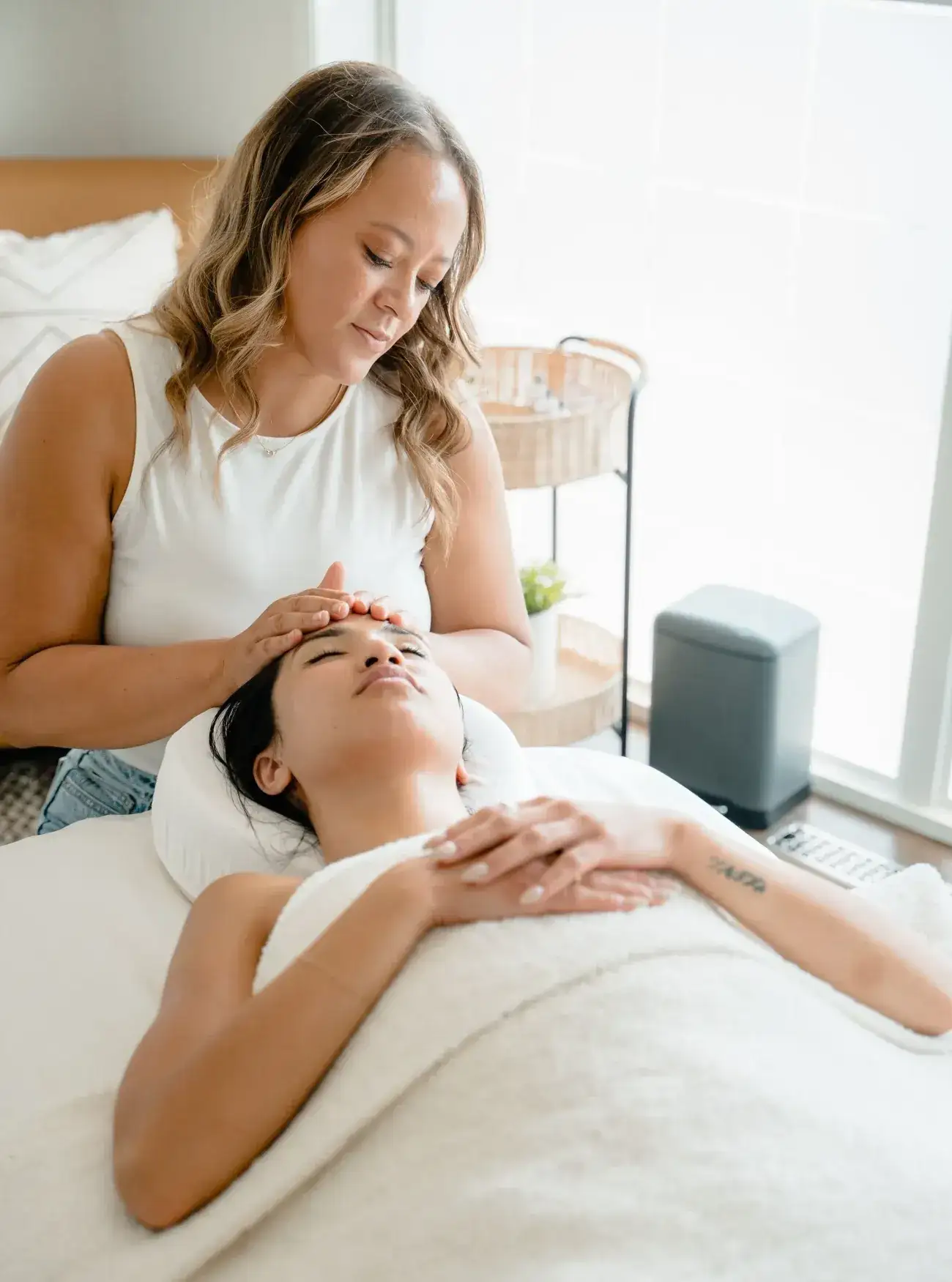
Massage is a reasonable companion to that care, not a replacement. Neck pain is half of this condition, and the small muscles at the base of the skull and across the top of the shoulders often guard and tighten when your neck is sore or your balance feels unreliable. Easing them can make the neck more comfortable while your physiotherapist works on the joints and your balance.
What a session looks like:
- Gentle work on the upper neck and shoulders. Slow, moderate pressure on the muscles below the skull, along the sides of the neck and across the upper trapezius.
- No fast or forceful neck movement. No quick rotations, no end-range stretching and no manipulation. The NHS advises moving your head carefully and slowly and not stretching your neck when you have vertigo.
- Comfortable positioning. Lying on your back or side with the head supported is often easier than lying face down. Tell us which positions bring on your symptoms.
- Slow transitions. The NHS advises getting up slowly and sitting on the edge of the bed for a while before standing, and the same applies on a massage table.
If the session makes your dizziness worse during or after, stop and tell your physiotherapist. That information helps them.
When to get urgent help or see a doctor first
Dizziness with any of the following needs emergency care. Call 911 or go to an emergency department, and do not drive yourself:
- double vision or loss of vision;
- hearing loss;
- trouble speaking;
- weakness, numbness or tingling in an arm or leg.
Ask for an urgent doctor’s appointment if your dizziness comes with a severe headache, vomiting or feeling very sick, or a high temperature with chills.
See a doctor before booking massage if:
- the dizziness is new, recurring or has never been assessed;
- it started after a head injury or a collision, so concussion and whiplash can be checked;
- you have new, severe or unusual neck pain, since problems with the neck arteries are among the causes to exclude.
How this works at Renu
Once a doctor or vestibular physiotherapist has assessed you, book massage therapy through Jane and mention the diagnosis and your trigger positions in the booking notes. A 30-minute massage ($80) is a gentle place to start and keeps the time spent lying down short. A 45-minute ($100) or 60-minute ($120) session gives room for the neck, shoulders and upper back together once you know how you respond.
If your symptoms began after a car accident, our pages on whiplash and post-concussion headache explain how those injuries are managed, and our cervicogenic headache page covers the related problem of head pain referred from the neck. Arrange a ride if you are not sure you will feel steady afterwards; there is free street parking on 19 Street for whoever drives you.
Questions people ask
How do I know if my dizziness is coming from my neck?
You cannot tell on your own, and neither can a massage therapist. There is no single test for it, so clinicians rule out inner-ear problems such as BPPV and vestibular neuritis, vestibular migraine, concussion effects on the inner ear and problems with the neck arteries first. A doctor or vestibular physiotherapist is the right first stop.
Is cervicogenic dizziness the same as vertigo?
Not quite. Vertigo is a spinning sensation, usually from the inner ear. Cervicogenic dizziness is more often described as imbalance or unsteadiness that comes with neck pain. People sometimes use the words interchangeably, which is one reason a proper assessment matters.
Can a chiropractor or physiotherapist treat cervicogenic dizziness?
The best trials used sustained natural apophyseal glides, a joint technique delivered by manual therapists, with a placebo comparison. Treatment by a physiotherapist trained in vestibular rehabilitation, combined with manual therapy, is the approach described in the clinical reviews we read. Ask any practitioner about their training in dizziness specifically.
Will lying face down on the massage table make me dizzy?
It might, especially if certain head positions bring on your symptoms. Lying on your back or side with the head supported is often more comfortable, and position changes can be made slowly. Tell your therapist which positions set you off before the session starts.
Sources
- Reiley et al., Archives of Physiotherapy (2017): How to diagnose cervicogenic dizziness
- NHS: Vertigo
- Reid and Rivett, Manual Therapy (2005): Manual therapy treatment of cervicogenic dizziness, a systematic review
- Reid et al., Manual Therapy (2008): SNAGs are an effective treatment for cervicogenic dizziness
- Reid et al., Archives of Physical Medicine and Rehabilitation (2014): Cervical spine manual therapy on range of motion, head repositioning and balance
- Wrisley et al., Journal of Orthopaedic and Sports Physical Therapy (2000): Cervicogenic dizziness, a review of diagnosis and treatment
Page reviewed October 5, 2026. This page is education, not a diagnosis. For your own situation, talk to your doctor, surgeon or care team, or ask us.
Keep reading
Related pages