

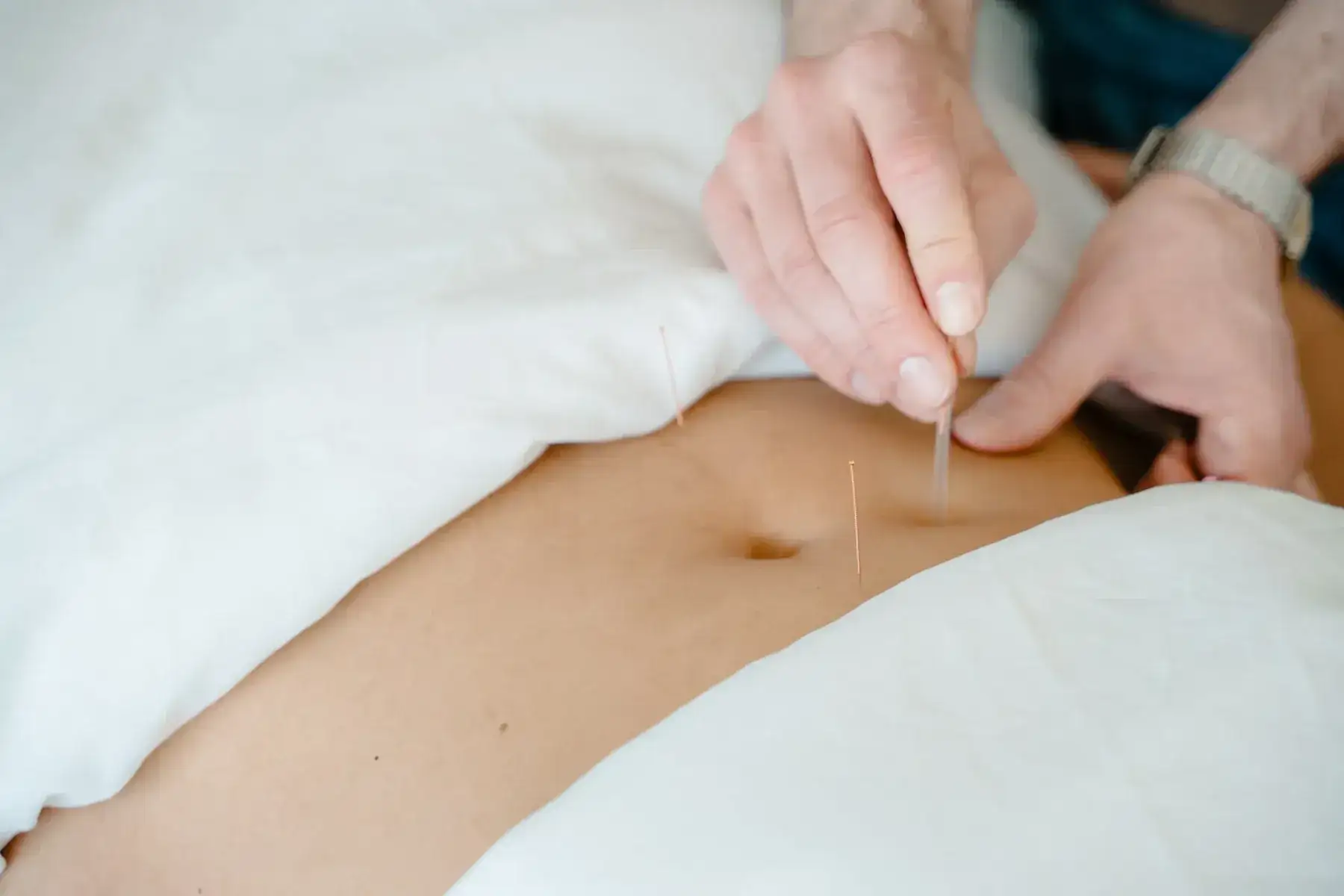
Is acupuncture safe?
Is acupuncture safe? Yes, with a trained practitioner and sterile needles: serious harm is about 1 in 10,000 patients; minor needle-site reactions are common.
By The Renu lymphatic and massage team · 5 min read
Yes, for most people, when it is done by a trained practitioner with sterile, single-use needles. A 2021 meta-analysis put serious adverse events at about 1 per 10,000 patients, while around 9% of people have a minor reaction such as bleeding, soreness or redness at a needle site. The serious harms that do occur, such as a punctured lung or infection, are linked to poor technique or nonsterile needles, which is why in Alberta acupuncture is regulated under the Health Professions Act.
For most people, yes. Acupuncture has been studied closely for harm, and the authors of a 2021 review of prospective studies concluded it can be considered among the safer treatments in medicine. That safety depends on two things you can check: a properly trained, regulated practitioner, and sterile needles used once. Most of what goes wrong in reported cases traces back to one or the other.
The numbers: how often things go wrong
A 2021 meta-analysis in BMJ Open pooled 21 prospective studies, the kind that record every problem as it happens rather than looking back. Its main figures:
| Outcome | How often |
|---|---|
| Any adverse event over a course of treatment | About 9.3% of patients |
| Any adverse event per individual treatment | About 7.6% of treatments |
| Adverse events needing medical treatment | About 1.1 per 1,000 patients |
| Serious adverse events | About 1 per 10,000 patients, or 8 per million treatments |
Half of all the minor events were bleeding, pain or a flare of redness at the needle site, which the authors note many consider part of the intended reaction to acupuncture. Serious events were rare.
The NCCIH reaches the same conclusion in plainer terms: relatively few complications from acupuncture have been reported, and the ones that have resulted from nonsterile needles and improper delivery.
What a serious complication looks like
Rare does not mean impossible, so it helps to know the warning signs. When acupuncture is delivered improperly, the NCCIH says it can cause infections, punctured organs and injury to the central nervous system.
Collapsed lung (pneumothorax). Alberta’s College of Acupuncturists names this as one of the most frequently reported complications. It can follow a needle placed too deeply on the chest, back or just above the collarbone. Symptoms are a cough, chest pain, or difficult or laboured breathing, either straight away or developing over the next few hours. If that happens after a treatment, go to an emergency department or call 911.
Infection. Infections linked to acupuncture have come from nonsterile needles. A needle site that becomes increasingly red, swollen or sore, or feeling feverish and unwell after a session, needs a doctor.
Injury near the spine or major vessels. The handbook lists points near the upper neck, the spinal cord and large arteries as areas needing extra care and training. Severe headache, nausea or vomiting, or new loss of sensation or movement during or after treatment are emergencies.
Who should take extra care
The NHS says acupuncture may not be safe if you take blood-thinning medicine or are at increased risk of bleeding, or if you have a skin condition or skin infection. Alberta’s handbook adds several situations that need caution or a different plan:
- pregnancy, because some points are traditionally avoided throughout
- bleeding disorders or blood thinners (our page on massage, cupping or acupuncture on blood thinners covers this)
- broken, inflamed or infected skin at the intended points
- diabetes, because of possible effects on blood sugar and reduced circulation in the hands and feet
- a pacemaker or other electronic implant, which rules out electroacupuncture
- a weakened immune system, or recent heart surgery, which raise infection risk
- being intoxicated, very tired, or not having eaten for a long time
None of these automatically rules you out. They are why your first visit starts with questions.
How acupuncture is regulated in Alberta
In Alberta, acupuncture is a regulated health profession. The College of Acupuncturists of Alberta is mandated under the Health Professions Act to regulate acupuncturists, and its stated main objective is to protect the safety of Albertans who use acupuncture. It sets minimum standards of practice and competency, publishes the safety handbook practitioners work from, and runs a public tool to verify a registered acupuncturist and a process to submit a complaint.
That matters because Cleveland Clinic notes that receiving acupuncture from unqualified practitioners can be harmful: an untrained provider or one using nonsterile needles can cause infections, organ punctures and nervous system injuries. If you are comparing acupuncture with dry needling offered by other professions, our acupuncture vs dry needling page explains the difference in training and rules.
A checklist for choosing a safe practitioner
Before or at your first appointment, you can reasonably expect:
- Registration you can verify on the College of Acupuncturists of Alberta’s website.
- A health history first, covering medications, bleeding problems, pregnancy, implants and skin conditions.
- Needles opened in front of you. Alberta’s handbook directs practitioners to open single-use needles and instruments just before use, in the patient’s presence. Our page on whether acupuncture needles are single-use explains the rules.
- Clean hands and a clean field for needles and swabs.
- A practitioner who checks in and adjusts or removes a needle that feels sharp.
- Honesty about what acupuncture can do. The NCCIH advises against using acupuncture to postpone seeing a health care provider about a health problem.
Minor after-effects are common and usually brief; see is bruising after acupuncture normal, and for what the needles feel like, does acupuncture hurt.
Acupuncture at Renu
At Renu, acupuncture is provided by Dr. Will Tanner, an acupuncturist trained in traditional Chinese medicine who is also a Registered Massage Therapist. Your first visit is a 90-minute initial consultation and treatment ($150), which leaves time for the health history above before any needles. To book, use Renu’s Jane page; the clinic is open seven days.
Questions people ask
What is the most serious risk of acupuncture?
Injury to an organ, most often a collapsed lung from a needle placed too deeply on the chest, upper back or above the collarbone, is the complication Alberta's safety handbook names as one of the most frequently reported. It is rare with proper training, which is why depth and angle near the chest are a core part of practitioner standards.
How do I check if an acupuncturist is registered in Alberta?
The College of Acupuncturists of Alberta offers a public tool to verify a registered acupuncturist on its website, alongside a way to submit a complaint. Checking takes a minute and is worth doing before your first visit.
Is acupuncture safe if I have diabetes?
It can be, with care. Alberta's handbook asks for special caution in diabetes because of possible effects on blood sugar and reduced circulation in the hands and feet, so mention it at your first visit.
Is acupuncture safe for children?
Children were outside the scope of the studies summarized on this page. Ask your child's doctor first, and call the clinic before booking so the acupuncturist can tell you whether they treat children.
Sources
- Bäumler et al., BMJ Open 2021: Acupuncture-related adverse events, systematic review and meta-analyses
- NCCIH: Acupuncture, effectiveness and safety
- College of Acupuncturists of Alberta: Safety Handbook for Alberta Practitioners (v1.2)
- College of Acupuncturists of Alberta: For the public
- NHS: Herbal medicines and complementary therapies (acupuncture safety)
- Cleveland Clinic: Acupuncture
Page reviewed October 5, 2026. This page is education, not a diagnosis. For your own situation, talk to your doctor, surgeon or care team, or ask us.

