
Answers
Does pressotherapy work like lymphatic drainage massage?
Does pressotherapy work like lymphatic drainage massage? Only partly: air boots squeeze fluid one way, while hands clear routes first. What the trials show.
By The Renu lymphatic and massage team · 5 min read
Only partly. Spa pressotherapy squeezes the legs in timed waves of air, which pushes fluid upward but cannot clear the neck and trunk first, reroute around damaged areas or adjust to the tissue the way a therapist's hands do. In healthy people the trials show trivial to small benefits, mostly less perceived soreness, and a placebo-controlled trial found no recovery benefit at all. In lymphedema care, pneumatic compression is an add-on to complete decongestive therapy, not a replacement for it.
Similar goal, different method
Pressotherapy and lymphatic drainage massage both aim to move fluid out of the tissues, but they go about it differently enough that one is not a stand-in for the other. Pressotherapy is the spa name for intermittent pneumatic compression: you lie back in inflatable boots, trousers or a full suit, and a pump fills a series of air chambers in timed waves, usually from the feet upward. Manual lymphatic drainage is done by a trained therapist’s hands.
The difference that matters most is where the work starts. The National Lymphedema Network’s 2025 position paper describes manual lymphatic drainage as beginning proximally and progressing distally: the therapist clears the neck, trunk and limb root first, then works outward, so fluid has somewhere to go. Our page on why lymphatic drainage starts at the neck explains the anatomy. A basic set of air boots starts at the feet and squeezes upward; it has no way to open the routes above it.
What hands can do that a sleeve cannot
A therapist does three things a spa compression device does not:
- Clears the drainage areas first. The neck, abdomen and lymph node regions are worked before the swollen area, so fluid is sent toward routes that are open.
- Adjusts to the tissue. The NLN describes pressure adapted to tissue texture: firmer over fibrotic, hardened tissue and lighter over soft tissue. A pump applies the pressure it is set to.
- Notices things. A therapist sees and feels skin changes, heat, asymmetry or tenderness that might mean you need a doctor, and adjusts or stops. A machine runs its cycle.
The medical world has noticed the first gap. Advanced pneumatic compression devices now include trunk and upper chambers for what the NLN calls proximal lymphatic pathway clearance. A pair of leg boots, by design, covers only the legs.
What the evidence says in healthy people
Most pressotherapy at spas and gyms is sold to healthy people for recovery, lighter legs or slimming. The research in that group is thin and the effects are small.
| Study | Who | What was found |
|---|---|---|
| Meta-analysis, Biology of Sport 2024 | 17 studies, 319 athletic or healthy people | Trivial to small benefit for muscle function, trivial to moderate effect on pain and soreness, highly variable effect on muscle damage markers |
| Randomized placebo-controlled trial, 2026 | Elite under-19 soccer players after matches | A single 30-minute session at 200 mmHg did no better than a placebo cream on jump height, fatigue, creatine kinase or soreness |
| Pilot study, Journal of Clinical Medicine 2024 | 15 healthy women aged 20 to 26 | Ten 30-minute leg sessions changed blood viscosity and cholesterol fractions; swelling, shape and fat were not measured |
The meta-analysis authors describe the most common protocols as about 20 to 30 minutes at around 80 mmHg and conclude that the main effect is a reduction in perceived soreness. That is a fair description of what you are buying: legs that may feel better, without strong evidence that they recover faster. Our page on lymphatic drainage for muscle recovery looks at the hands-on side of the same question.
Where pneumatic compression genuinely helps
Pneumatic compression has a real place in lymphedema care, but as a supporting tool. The NLN’s summary is that it plays a role as an adjunct to the maintenance phase of complete decongestive therapy rather than a stand-alone treatment, and that trials show it can reduce swelling and improve quality of life when used that way. The National Cancer Institute adds a caution: there is a theoretical concern that pressures above 60 mmHg and long-term use may injure lymph vessels.
That caution is worth repeating if you have lymphedema and are tempted by a spa session. A systematic review summarized by the NLN found adult lymphedema protocols trending toward lower pressures of 30 to 60 mmHg, while recovery-style devices are commonly run at around 80 mmHg and sometimes far higher. If a home pump is being considered for medical swelling, our pages on home pneumatic compression pumps and the pump vs manual lymphatic drainage comparison cover prescription, pressure and fit in detail.
When to skip both and see a doctor
Neither machine nor hands is the right first step for some kinds of swelling. See your doctor before either if you have:
- Swelling in one leg that is warm, painful or red, which may be a blood clot or an infection
- A fever or an active skin infection
- Heart failure that is not well controlled
- New swelling after cancer treatment, which needs assessing rather than squeezing
The NLN lists acute infection, decompensated congestive heart failure and acute deep vein thrombosis as contraindications to manual lymphatic drainage. The same conditions are reasons not to climb into compression boots either.
How this works at Renu
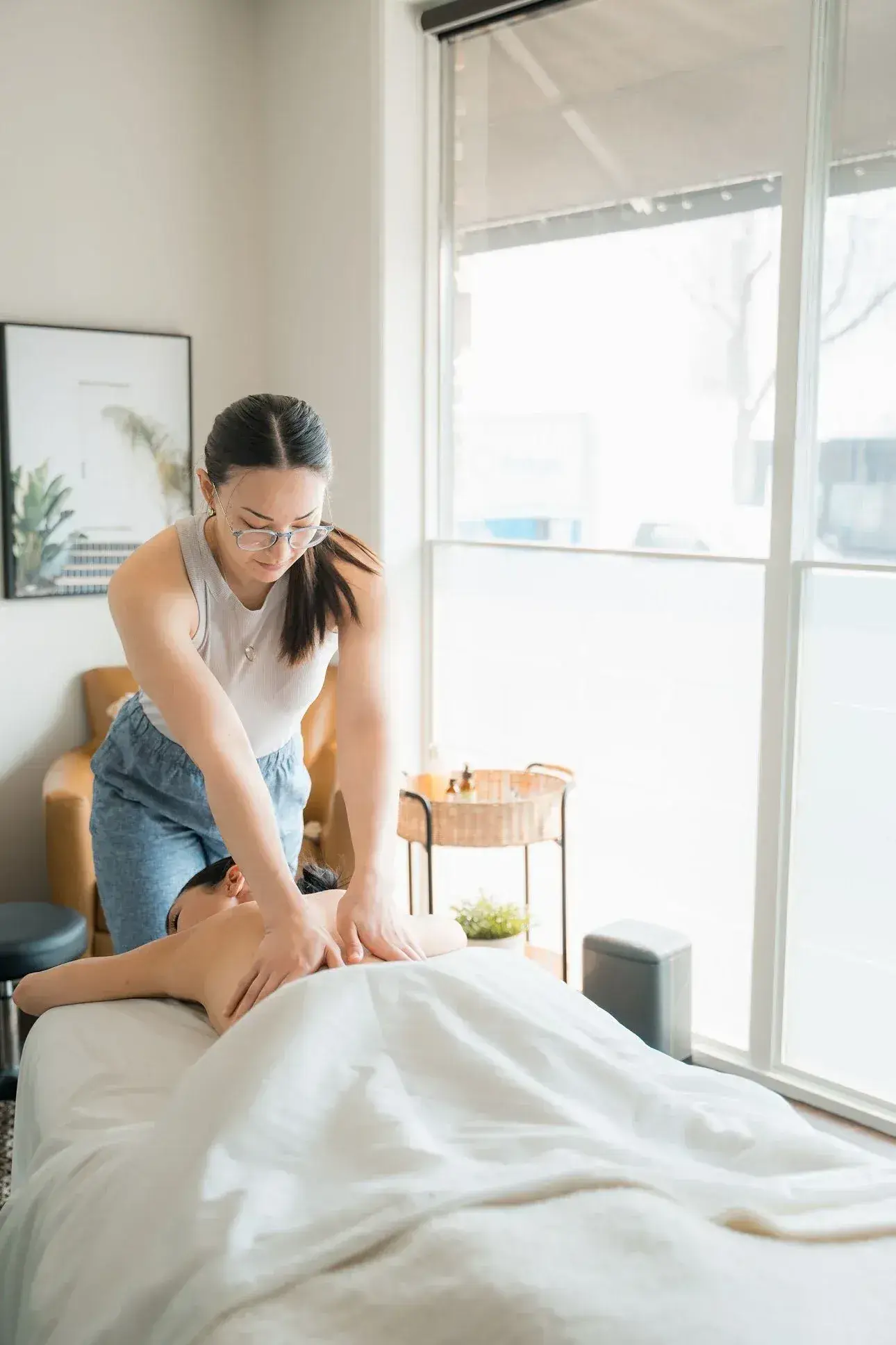
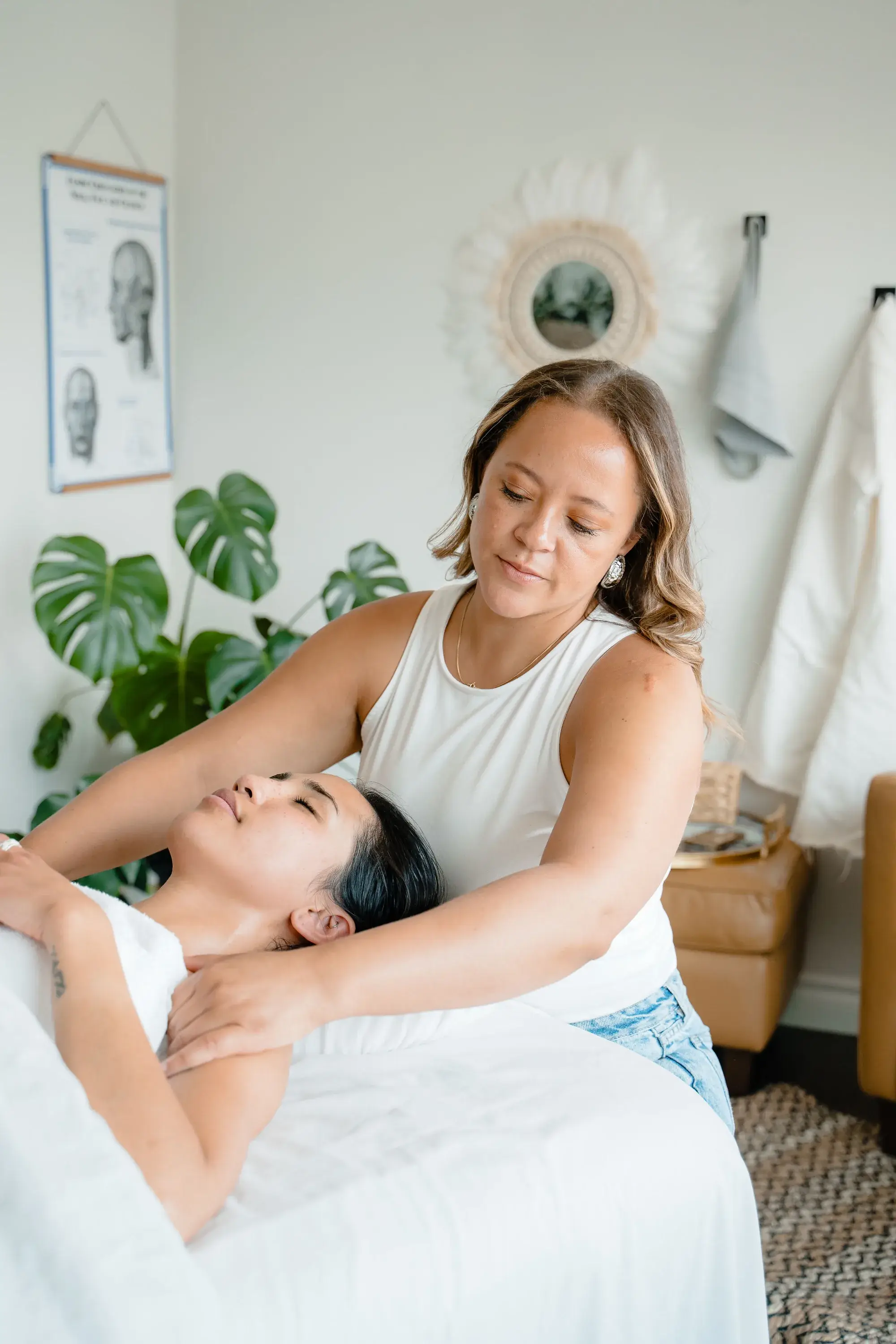
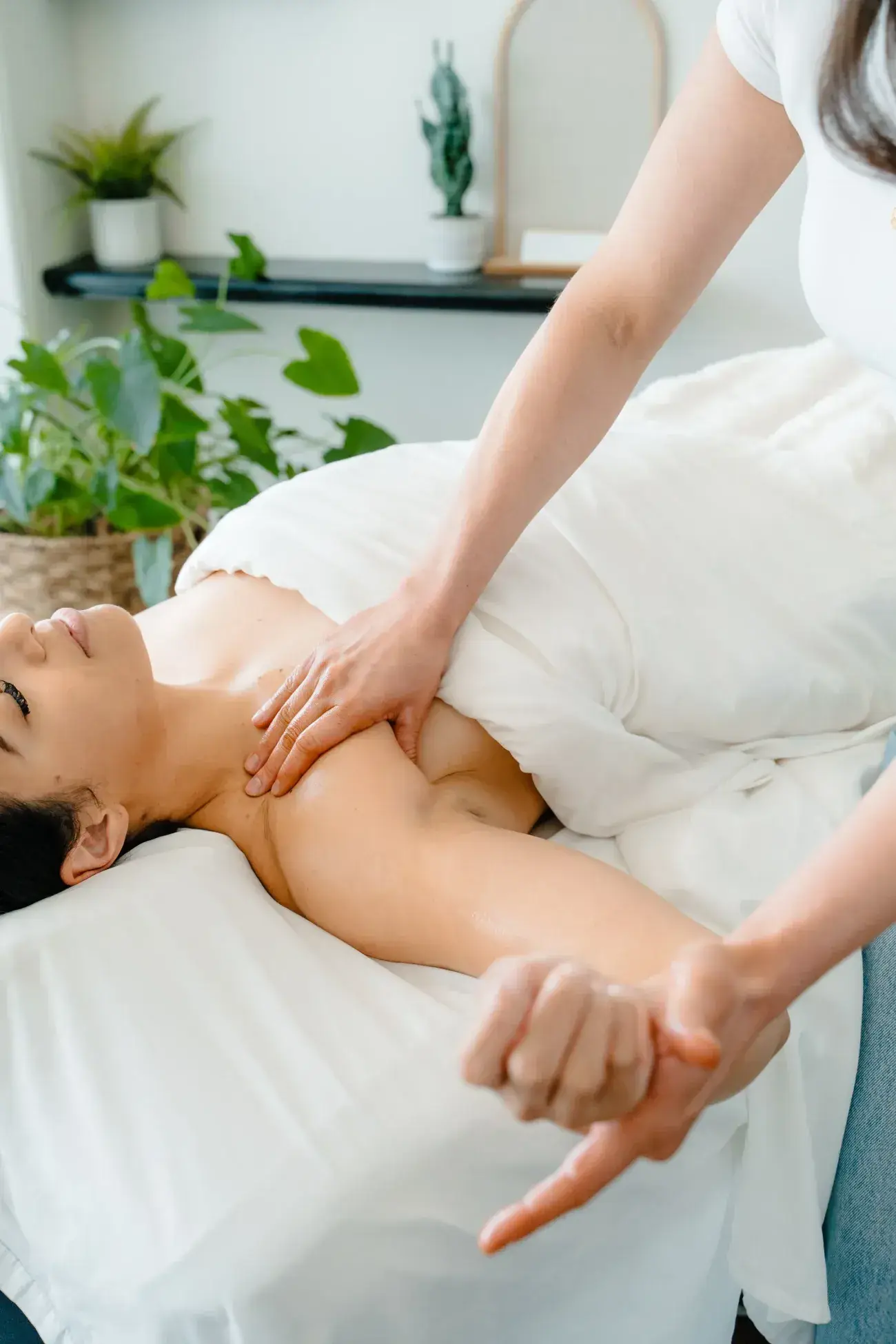
We do not offer pressotherapy. What we offer is hands-on lymphatic drainage massage with our Registered Massage Therapists: a classic session is 30, 45 or 60 minutes, and 60 minutes is $130. For a healthy person with heavy legs after a long week or a long flight home to Calgary, that session works the neck, abdomen and legs in order, at a pressure suited to your tissue.
If your swelling is lymphedema or lipedema, Meeghan Mackenzie, our Certified Lymphedema Therapist and Certified Compression Fitter, can talk with you about where compression, garments and hands-on work each fit. Book through Jane or call the clinic in West Hillhurst if you are not sure which appointment you need.
Questions people ask
Does pressotherapy help with cellulite or slimming?
We did not find trials showing that it reduces cellulite or fat. A 2024 study of ten 30-minute leg sessions in healthy young women measured blood viscosity and cholesterol fractions, not body shape or swelling, so it cannot support slimming claims. Any tighter feel afterwards is fluid that has moved, and it returns.
Are recovery boots worth it after a long run?
They may make your legs feel less sore, and that is about all the evidence supports. A meta-analysis of 17 studies found trivial to small effects on muscle function, while a placebo-controlled trial in elite youth soccer players found no recovery benefit from a 30-minute session. If they feel good and you already own a pair, there is little harm in using them on healthy legs.
Can I use pressotherapy if I have lymphedema?
Only with your lymphedema therapist's or doctor's guidance, and not as a substitute for your garments and therapy. The National Cancer Institute notes a theoretical concern that pressures above 60 mmHg and long-term use may injure lymph vessels, and spa devices are often run much higher than that.
Is a pressotherapy session cheaper than lymphatic drainage?
Spa prices vary, so compare what you are actually buying. A machine session pushes fluid in one direction, while a hands-on session includes clearing the neck and trunk, adjusting to the tissue and someone looking at your swelling. Choose on purpose, not on price alone.
Sources
- Maia et al., Biology of Sport 2024: Effects of lower-limb intermittent pneumatic compression on sports recovery, systematic review and meta-analysis
- Maia et al., BMC Sports Science, Medicine and Rehabilitation 2026: Intermittent pneumatic compression does not improve post-match recovery in youth soccer players, randomized placebo-controlled trial
- Ptaszek et al., Journal of Clinical Medicine 2024: Lower limb pressotherapy and blood indices in young, healthy women
- National Lymphedema Network: Lymphedema diagnosis and treatment, position paper (2025)
- National Cancer Institute: Lymphedema (PDQ), health professional version
Page reviewed October 5, 2026. This page is education, not a diagnosis. For your own situation, talk to your doctor, surgeon or care team, or ask us.
Keep reading
Related pages