

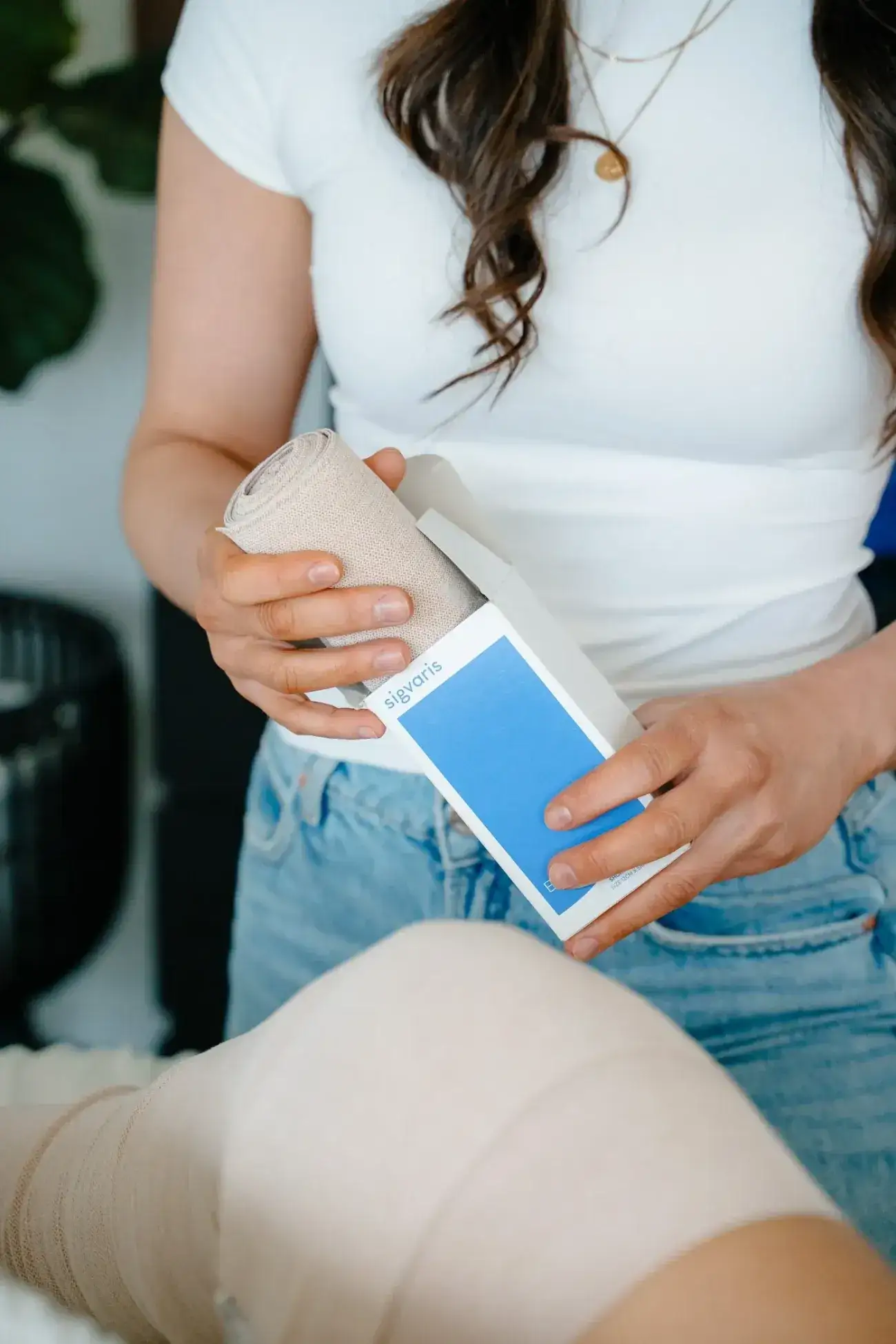
Compression garment fitting in Calgary
Compression garment fitting in Calgary: a 30-minute, $25 fitting with Meeghan Mackenzie, CLT and Certified Compression Fitter, for lymphedema or surgery.
By The Renu lymphatic and massage team · 5 min read
A compression garment fitting at Renu is a 30-minute appointment ($25) with Meeghan Mackenzie, our Certified Lymphedema Therapist and Certified Compression Fitter, who measures you in clinic and orders the garment through medical compression suppliers such as Juzo Canada. Fittings are available for lymphedema, lipedema and every kind of surgery, and we recommend Prairie Wear for compression bras. Garment costs are separate, and if you hope to use Alberta Aids to Daily Living funding, check its rules before you order.
What the fitting includes
The fitting is a 30-minute appointment, $25, in which a certified fitter assesses you, measures you and helps you choose the right garment. At Renu that fitter is Meeghan Mackenzie, our founder, who is a Registered Massage Therapist, a Certified Lymphedema Therapist and a Certified Compression Fitter. She measures and fits you in clinic, then orders the garment through medical compression suppliers such as Juzo Canada. For compression bras, we recommend Prairie Wear.
In a typical fitting Meeghan will:
- ask why you need compression, what you have worn before and what did or did not work;
- look at the skin and the shape of the area, because swelling, scars and tissue changes affect the choice;
- take measurements at set points along the limb or area;
- talk through the options, from ready-made to custom, and the compression strength that suits your situation;
- explain how to put the garment on, care for it and know when it no longer fits.
The step-by-step of where and how limbs are measured is on measuring for compression garments, and the main manufacturers are compared on compression garment brands.
Who comes for a fitting
People book fittings for three main reasons, and the garment differs for each.
| Situation | Typical garment | Notes |
|---|---|---|
| Lymphedema after cancer treatment or from other causes | Arm sleeve, glove or gauntlet, stocking, or trunk garment | Often part of complete decongestive therapy |
| Lipedema | Leggings, stockings or capris | Garments come in many types, sizes and strengths and should be tailored to you |
| Recovery from surgery | Post-surgical garment or compression bra | Available for every kind of surgery; follow your surgeon’s instructions |
The Lipedema Foundation says garments should be tailored to the person, because there are many types, sizes and strengths. The NHS lists compression stockings or bandages among the measures that reduce pain and discomfort in lipoedema. For lymphedema, the National Lymphedema Network says garments should ideally be prescribed or fitted by a certified lymphedema therapist, because ill-fitting garments have the potential to cause harm.
Why a professional fit matters
A garment that constricts can work against you, as our answer on whether a compression garment can make swelling worse explains, and one that is too loose does little. That is the reason to be measured by someone trained to do it rather than ordering by dress size; the trade-offs are laid out on buying compression garments online versus being fitted.
Timing helps too. Alberta’s AADL manual tells approved vendors to fit clients between 8 and 11 in the morning, when swelling is generally lowest. Renu opens at 8 am on weekdays, so an early fitting is often possible. After the garment arrives, wear it as instructed and tell us if it rolls, slips, pinches or leaves deep marks.
Garments wear out. The National Lymphedema Network recommends replacing day garments about every six months and night garments about every twelve months, or as the manufacturer advises, because they lose effectiveness. It also suggests checking the manufacturer’s guidance on which lotions are safe to use, since some products can damage fibres or change how the garment works.
How AADL funding works in Alberta
Alberta Aids to Daily Living (AADL) can help fund compression garments for eligible Albertans, but it has its own route, and Renu does not claim to be an AADL vendor or to bill directly. Under AADL Manual N:
- People with chronic lymphedema should be assessed by a Certified Lymphedema Therapist or a Specialty Assessor; if neither is accessible, a prescription from a physician or nurse practitioner is required.
- Venous conditions qualify only at certain stages of chronic venous disease, assessed with a lower leg assessment.
- Anyone doing the actual fitting must be a certified fitter through a manufacturer course AADL recognizes, renewed every three years.
- Ready-made garments are limited to three pairs per 12-month period (two pairs if only one leg needs compression), and AADL does not fund garments for short-term interventions or for prevention.
That last point matters after cosmetic surgery: a garment for a few weeks of recovery is a short-term intervention, so it is usually paid privately or through an extended health plan. The full detail is on AADL compression garment coverage in Alberta and the AADL fitting process.
Booking your fitting
Book the 30-minute compression fitting with Meeghan online through Jane, or phone the clinic if you are not sure which garment you need. Bring any prescription, your surgeon’s instructions and your current or old garments. The clinic sits on 19 Street NW in West Hillhurst, with free street parking.
When to check with your doctor first
Compression is not safe for every limb. Check with your doctor before being fitted if you have:
- signs of infection in the limb, such as redness, warmth, pain, fever or chills; AADL lists acute cellulitis as a contraindication, and the National Lymphedema Network treats suspected infection in a lymphedema limb as urgent;
- known or suspected poor circulation in the legs; the National Lymphedema Network notes that compression garments are contraindicated and poorly tolerated with significant peripheral artery disease;
- an untreated tumour in the limb, or open wounds where the garment would sit;
- sudden swelling in one leg with calf pain, which needs a medical assessment for a blood clot before any compression.
Questions people ask
Does the $25 fitting include the garment?
No. The $25 covers the 30-minute fitting with Meeghan. The garment is ordered separately through a medical compression supplier, and its price depends on the type, length, knit and whether it is ready-made or custom.
Can you fit me for a garment my surgeon prescribed?
Yes. Compression garment fitting and ordering are available for every kind of surgery. Bring your surgeon's instructions so the garment matches the stage and strength they want.
Does Renu bill AADL or my insurer directly?
If you are using Alberta Aids to Daily Living or an extended health plan, ask the program or your insurer what paperwork they need before you order, so you can keep your receipt and documents for the claim.
How often will I need to be refitted?
Whenever your body changes and whenever a garment wears out. The National Lymphedema Network recommends replacing day garments about every six months and night garments about every twelve months, or per the manufacturer, because they lose their effect over time.
Sources
Page reviewed October 5, 2026. This page is education, not a diagnosis. For your own situation, talk to your doctor, surgeon or care team, or ask us.

