
Answers
Can you get a massage with a new tattoo?
Can you get a massage with a new tattoo? Yes, everywhere but the tattoo. Keep oil, friction, cups and pressure off healing ink until the skin has settled.
By The Renu lymphatic and massage team · 5 min read
Yes, as long as the new tattoo itself is left alone. Massage elsewhere on the body is fine, but oil, gliding strokes, cupping and firm pressure should stay off the tattooed skin until it has healed, which takes weeks for the surface and months for the deeper layers. Tell your therapist where it is when you book.
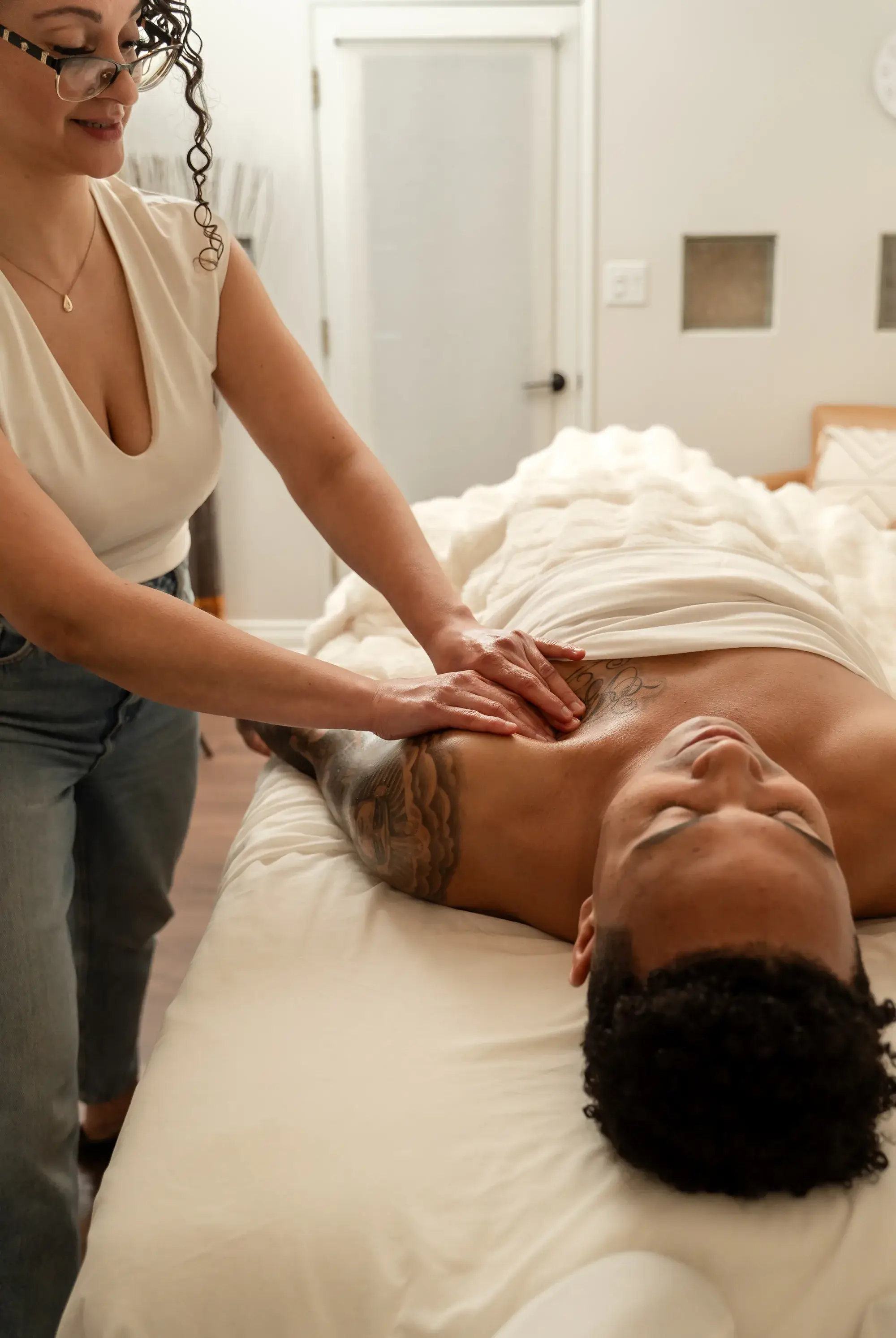
Yes, with one firm rule: the new tattoo itself is left alone. A fresh tattoo is a healing wound, and while your therapist can work anywhere else on your body, oil, gliding strokes, cups and firm pressure should stay off the tattooed skin until it has healed. The surface takes a few weeks to settle and the deeper layers take months, so the waiting time depends on what treatment you want over that spot.
Why a healing tattoo needs to be left alone
Tattooing deliberately injures the skin to place ink in it, and for a while that skin behaves like any other wound. DermNet describes the expected reaction as redness and swelling that usually disappears within two to three weeks.
Cleveland Clinic’s aftercare guidance spells out what the skin needs during healing, and most of it is the opposite of a massage:
- Loose clothing and nothing rubbing. Cleveland Clinic recommends loose, breathable clothing and avoiding tight clothing during healing, to prevent irritation. Repeated strokes over the area create the same friction.
- No exfoliating. Gliding pressure over scabbing or flaking skin can lift flakes early, and Cleveland Clinic says to let scabs fall off on their own.
- Gentle, clean products only. The aftercare advice is a mild, fragrance-free soap and a plain moisturiser, and to avoid petroleum jelly. Massage oils and lotions are not chosen with healing ink in mind.
- No soaking. Cleveland Clinic advises staying out of pools, hot tubs and baths until the tattoo has healed.
There is also an infection angle. Any break in the skin is a way in for bacteria, and hands, oil and linen that touch many areas of the body are not what a fresh wound needs.
How long to wait, by treatment
Different treatments ask different things of the skin, so the wait is not one number.
| Treatment over the tattooed area | When it is usually reasonable |
|---|---|
| Massage elsewhere on the body | Any time you feel well, with the tattoo avoided |
| Light touch near, not on, the tattoo | Once redness and swelling have settled, about two to three weeks |
| Gliding strokes with oil directly over it | Once the surface has fully healed, about two months for most tattoos |
| Firm or deep pressure over it | Once the surface has healed and it is not tender |
| Cupping over it | Once fully healed, and later still for a large or heavily shaded piece |
| Infrared pod or any heat session | Once the surface has healed and there is no open skin |
Cleveland Clinic says the top layer of skin typically heals in about two months, deeper layers take several more months, and larger tattoos take longer. Small tattoos on the hands and wrists tend to heal faster. If your artist gave you a specific timeline, follow theirs.
Why cupping and gliding strokes matter more than pressure
People often assume that pressure is the risk, but on new ink the bigger issues are suction and drag.
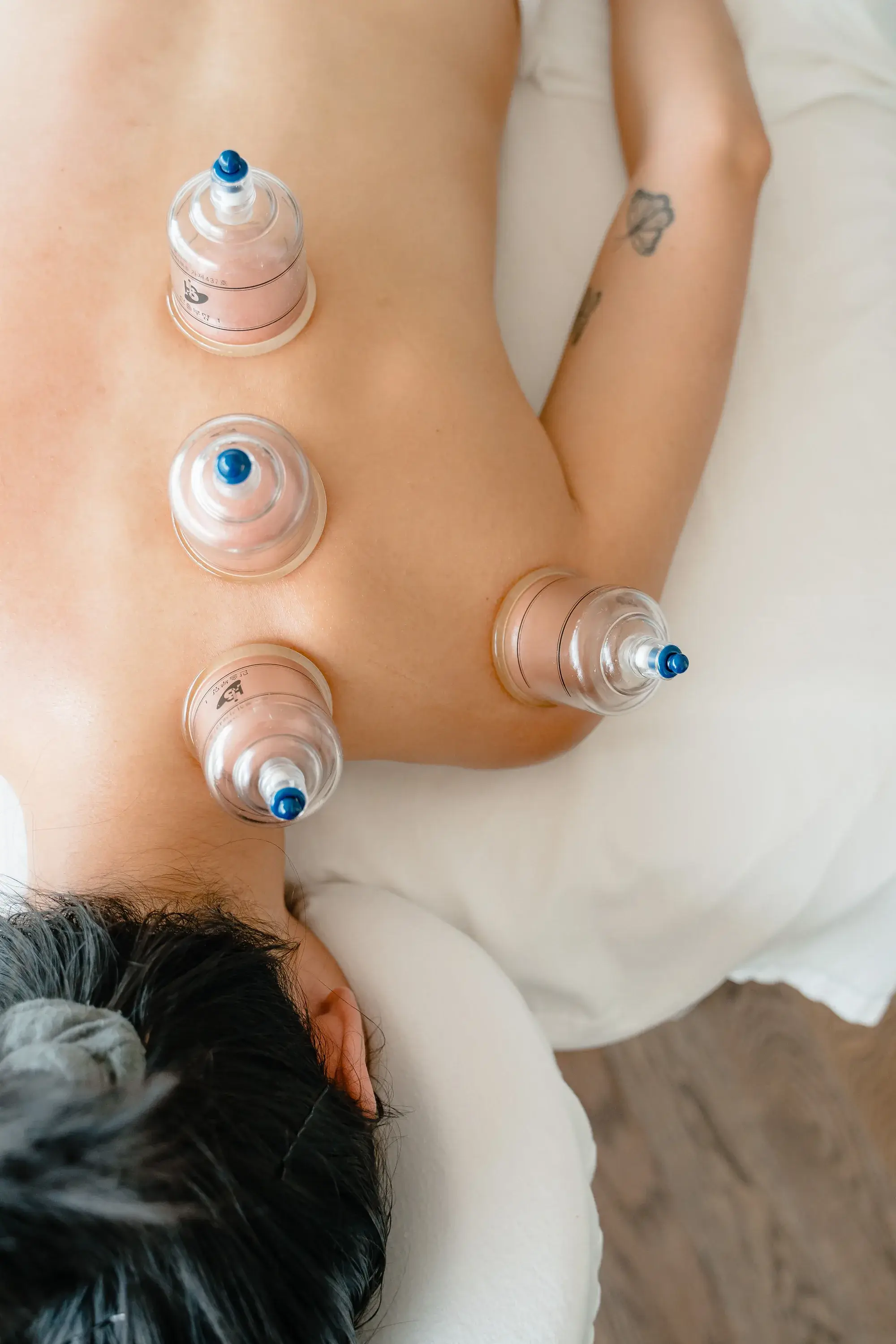
Cupping lifts the skin into the cup and, in myofascial cupping, slides cups across the skin while that suction holds. On healing skin, that pulls at the very layer that is trying to close.
Gliding strokes drag across the surface repeatedly, which is the friction that aftercare advice tries to avoid.
Still pressure, such as holding a point through a sheet well away from the ink, asks less of the surface. That is why a therapist may be comfortable doing gentle static work near a tattoo long before they would oil and glide over it.
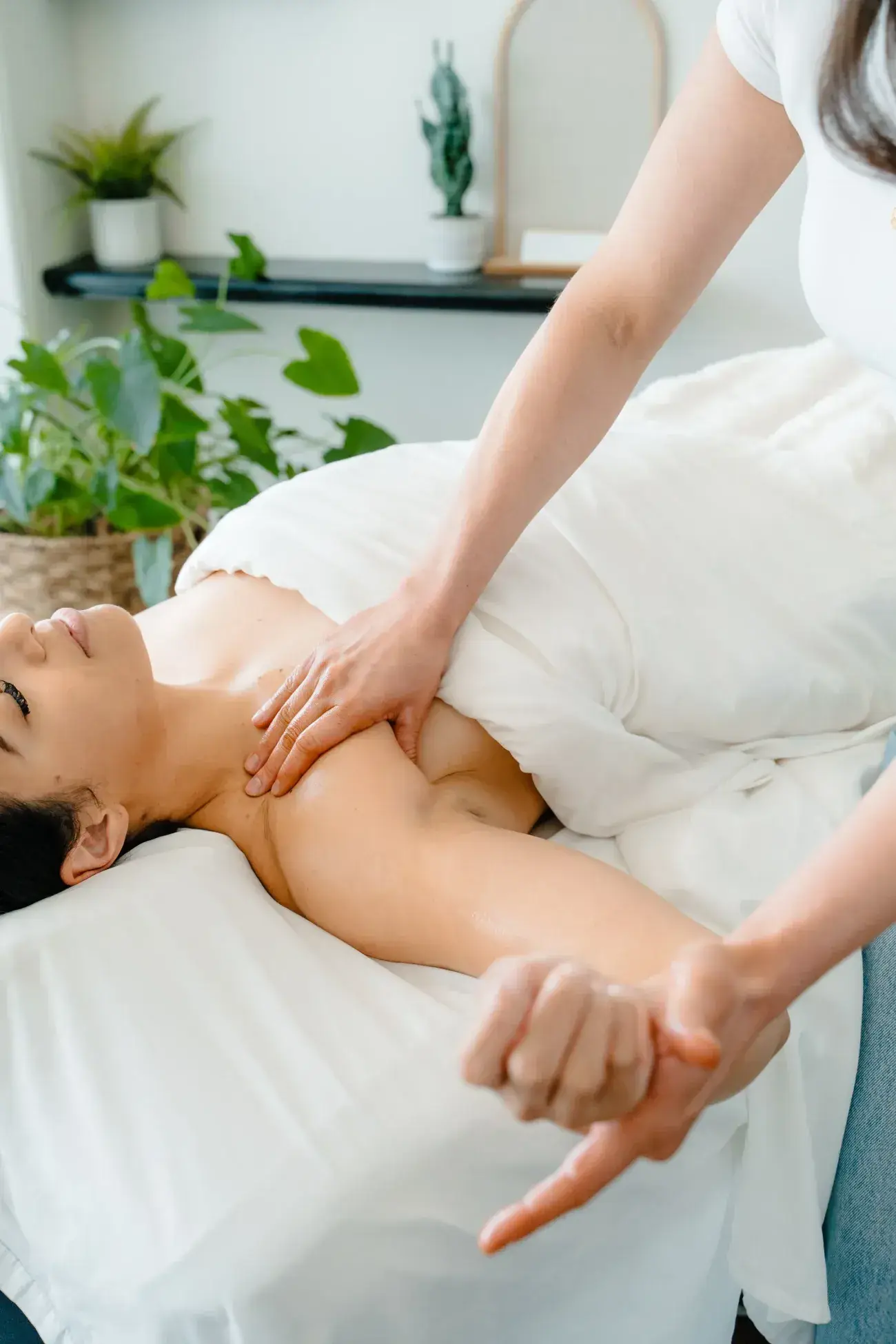
Lymphatic drainage, which works by gently stretching the skin, follows the same rule: keep it off the tattoo until it has healed, and route around it.
What to tell your therapist
Mention the tattoo when you book or as soon as you arrive. NCCIH advises telling your massage therapist about sensitive areas and recent treatments, and a fresh tattoo is both. Useful details:
- where it is and how big;
- when you got it;
- whether it is still covered with film or a dressing;
- whether it feels tender, itchy, hot or raised;
- any reaction to products, especially if the tattoo includes red ink.
That last point matters because DermNet notes that red pigments cause the most allergic reactions, and that some of these are delayed hypersensitivity reactions that appear well after the tattoo has healed. If an older tattoo becomes itchy, raised or lumpy, that is a reason to see a doctor or dermatologist, not to have it massaged.
Your therapist can then plan positioning, keep linen and product off the area, and adjust the session. If the tattoo is on your back and you are booked for a back-focused massage, it may make more sense to move the appointment or change the focus to legs, arms, neck and feet.
Signs of infection: see a doctor, not a massage therapist
Most tattoos heal without trouble, but Cleveland Clinic lists signs that need medical attention:
- fever;
- skin around the tattoo that feels hot;
- a bad smell or drainage from the area;
- pain that is increasing rather than settling;
- red streaks running from the tattoo towards the centre of your body.
Any of these means cancel the massage and see a doctor. If you have lymphedema, or an arm or leg at risk of it, be especially careful with new tattoos on that limb and talk to your care team first.
Booking a massage around new ink at Renu
If the tattoo is somewhere easy to avoid, keep your massage and tell your therapist on arrival. If it sits right where you want work done, or you were planning cupping or a pod session, it is usually better to rebook for once the surface has healed. You can move an appointment through Jane or by calling our West Hillhurst clinic. If you are also nursing a sunburn or a rash, see massage with a sunburn and massage with a skin rash.
Questions people ask
Can massage oil fade a new tattoo?
We did not find evidence that massage oil itself fades ink. The concern is the healing skin: aftercare guidance asks you to avoid rubbing, tight clothing and exfoliating while it heals, and repeated oiled strokes do exactly that. Once the tattoo has fully healed, ordinary massage over it is fine.
Can I lie on a new back tattoo during a massage?
Usually not comfortably in the first few weeks, and it presses healing skin against the table linen. A side-lying or face-down position that keeps weight off the tattoo, or a session focused on other areas, is the gentler choice.
Is it okay to get a massage the same week as a tattoo?
Yes, if the tattoo is somewhere the therapist can avoid and you feel well. Bring it up at the start, keep it covered if your artist told you to, and skip the infrared pod or any soaking until it has healed.
Should I wait to get a tattoo until after a series of lymphatic sessions?
If you have lymphedema or an arm or leg at risk of it, talk to your doctor or lymphedema therapist before any tattoo on that limb, because broken skin is an infection route. For everyone else, the main thing is simply to plan so the tattoo is not in the area being treated.
Sources
Page reviewed October 5, 2026. This page is education, not a diagnosis. For your own situation, talk to your doctor, surgeon or care team, or ask us.
Keep reading
Related pages