
Can you combine lymphatic drainage with a regular massage?
Yes, most healthy people can combine lymphatic drainage with a regular massage in one visit. How the two halves differ, and when to keep them apart.
By The Renu lymphatic and massage team · 5 min read
Yes. For most healthy adults, one appointment can include both lymphatic drainage for puffiness and regular massage for tight muscles, because the two techniques work on different layers and do not cancel each other out. Keep them separate if you have had recent surgery, have lymphedema in the area, or have a fever, infection, blood clot or uncontrolled heart condition. At Renu the combination is booked as a 60 or 90 minute session.
Yes, one appointment can do both
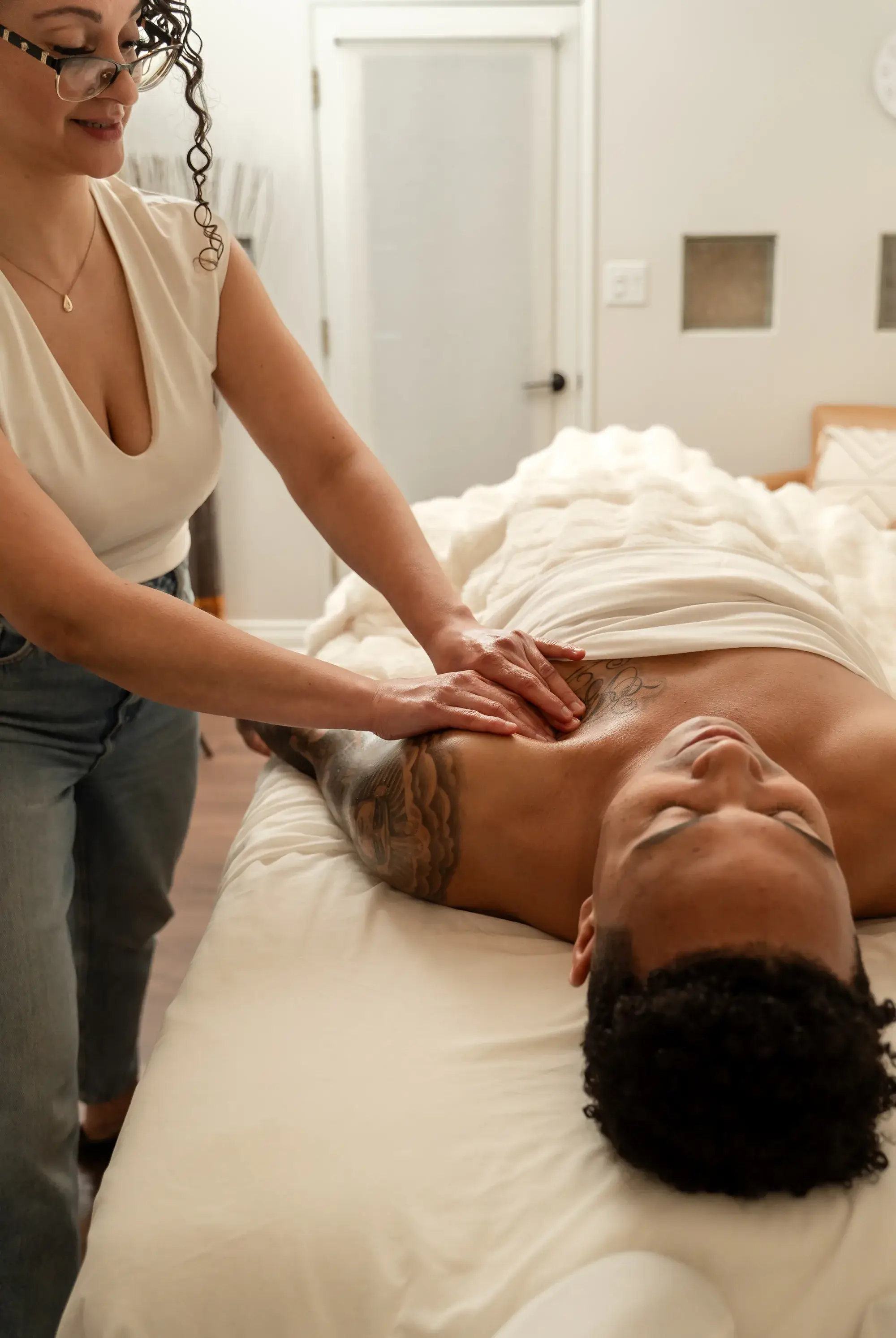
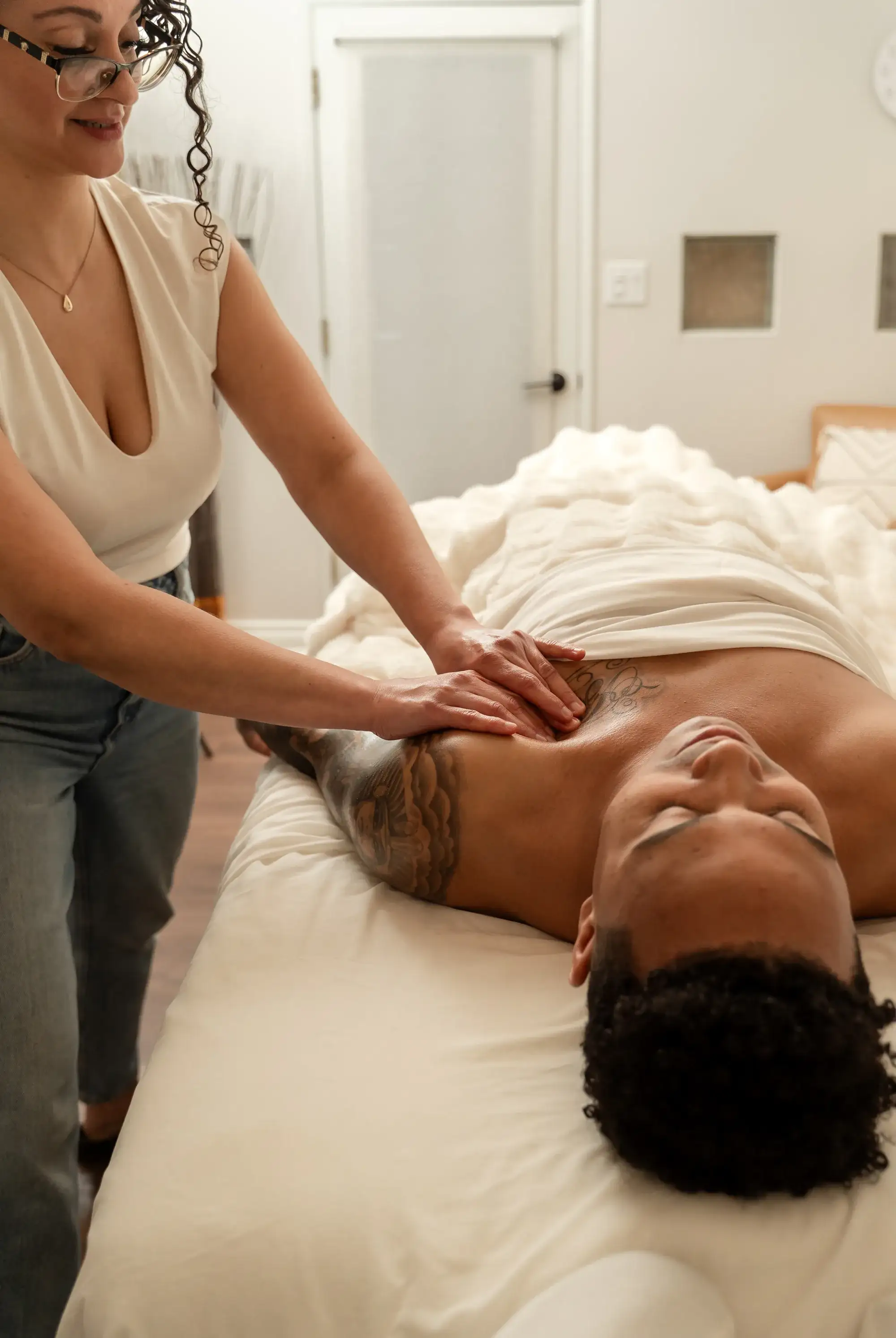
For most healthy adults, combining lymphatic drainage with a regular massage in one appointment is safe and sensible. People ask because the two feel so different: one is slow and barely there, the other firm enough to find the knot under your shoulder blade. That difference is the reason they sit together comfortably. They are aimed at different tissues, so one does not erase the other.
A typical case: your upper back is stiff from a week at the desk, and by evening your ankles and lower legs feel heavy and full. A combined session lets your therapist spend part of the time on the muscles and part on moving fluid, rather than making you choose which problem matters more this week.
Two tools aimed at different layers
The lymphatic half works at the skin. The Cleveland Clinic describes lymphatic drainage massage as gentle, using light pressure and specific techniques to move excess fluid from the tissues toward the lymph nodes in the neck, armpits and groin. The National Lymphedema Network’s 2025 position paper explains the mechanics: each stroke has a working phase, where gentle pressure and skin stretching increase lymph formation, and a relaxation phase that lets the small lymph vessels refill. The sequence begins near the trunk and moves outward, so the drainage routes are open before fluid is sent toward them.
The massage half works at the muscle. Firmer, slower strokes and sustained pressure address tension and soreness in the tissue below the skin.
| Lymphatic drainage | Regular massage | |
|---|---|---|
| Layer it works on | Skin and the small lymph vessels just beneath it | Muscle and connective tissue |
| Pressure | Light, rhythmic skin stretch | Moderate to firm, adjusted to you |
| Order | Neck and trunk first, then out toward the limbs | Wherever the tension is |
| What you notice | Lightness, more trips to the bathroom | Looser muscles, sometimes next-day tenderness |
Our longer comparison of lymphatic drainage vs deep tissue massage explains when each one is the better choice on its own.
What the evidence says about each half
The massage half has a reasonable evidence base for muscle recovery. A 2018 meta-analysis in Frontiers in Physiology pooled 99 studies of recovery methods after exercise and concluded that massage seemed the most effective method for reducing delayed onset muscle soreness and perceived fatigue. Massage and cold exposure were the strongest of the methods for lowering inflammatory markers, although the overall decreases in interleukin-6 and C-reactive protein were small.
A small laboratory study gives a glimpse of why. In 2012, researchers gave 11 young men ten minutes of massage to one exercised thigh and none to the other, then took muscle biopsies. Massage dampened the production of two inflammatory signalling molecules, TNF-alpha and interleukin-6, without changing the muscle’s glycogen or lactate. It is one small study, but it suggests firm massage does something real at the muscle level.
The lymphatic half has mostly been studied in people with lymphedema, and even there the National Lymphedema Network calls the evidence for manual lymphatic drainage used alone mixed, while describing it as safe. In a healthy person with end-of-day puffiness, what you can reasonably expect is a temporary shift of fluid and a lighter feeling, not a lasting change. If muscle recovery is your main reason for booking, our page on whether lymphatic drainage helps muscle recovery looks at the athlete studies.
When to keep them separate
Combining is not right for everyone. Some situations call for lymphatic work alone, some for neither, and a few for a doctor first.
Book lymphatic drainage on its own, not a combination, if:
- You had surgery recently. Fresh surgical swelling needs light, planned post-operative drainage, not firm pressure near incisions. Our post-op lymphatic drainage sessions are built for that.
- The area has lymphedema. Deep pressure is kept off a limb with lymphedema; see deep tissue massage with lymphedema for the reasons.
Postpone both and speak with your doctor if you have:
- A fever or an active infection, including cellulitis
- A known or suspected blood clot, such as a deep vein thrombosis
- Heart failure that is not under control, or kidney failure
- A recent stroke
These come from the Cleveland Clinic’s list of people who should not have lymphatic drainage massage and the National Lymphedema Network’s contraindications, which name acute infection, decompensated congestive heart failure and acute deep vein thrombosis. The Cleveland Clinic also notes that therapists do not massage directly over cancerous tissue or radiation-damaged skin. A sudden, painful, warm, one-sided calf swelling is a reason to see a doctor the same day, not to book a massage.
How a combined session runs
Before the session starts, say which areas feel tight and which feel puffy. That is what decides how the time is split. If your legs are the puffy part, the lymphatic work usually starts at the neck and trunk before it reaches them, because that is how the routes are cleared. The muscle work goes where the tension is.
Afterwards, most people feel loose and a little sleepy, and many notice they need the bathroom more over the next day. The Cleveland Clinic notes that some people feel tired, get a headache or feel queasy after lymphatic work, though it describes negative reactions as uncommon. Next-day tenderness, if any, comes from the deeper massage, not the lymphatic strokes.
Booking the combination at Renu
At Renu the massage and lymphatic combination is a set booking on our massage therapy menu: 60 minutes for $130 or 90 minutes for $165; ask when you book who will be providing it. For comparison, a 60-minute massage alone is $120 and a 60-minute classic lymphatic drainage massage is $130, so at 60 minutes the combination costs the same as the lymphatic session alone.
Choose 60 minutes when you have one area of tension and one area of puffiness. Choose 90 minutes when you want both halves over more of the body. If you are not sure the combination suits your situation, our page on who should not have lymphatic drainage massage is a good check before you book through Jane.
Questions people ask
Does deep pressure undo the lymphatic part of the session?
Not in a healthy body. The two techniques simply work at different depths: lymphatic strokes stretch the skin to fill the small vessels just beneath it, while massage works the muscle underneath. The caution about deep work applies to limbs with lymphedema or fresh surgical swelling, where firm pressure is kept out of the area altogether.
Is 60 minutes long enough for both?
It is enough if your goals are focused, for example tight shoulders plus puffy ankles. If you want full-body muscle work and lymphatic work on both legs and the abdomen, 90 minutes gives each half room without rushing the slow lymphatic strokes.
Should I book the combination or two separate appointments?
Book separately if one need clearly outweighs the other, or if your swelling is medical, such as lymphedema or a recent surgery. The combination suits the common in-between case: a desk-worn back and legs that feel heavy by the end of the day.
Can I ask for the lymphatic part on my face only?
You can ask for it wherever the puffiness is, including the face and neck. Tell your therapist at the start so the time is planned around it; the neck is usually cleared first, since that is where lymph returns to the bloodstream.
Sources
- Cleveland Clinic: Lymphatic drainage massage
- National Lymphedema Network: Lymphedema diagnosis and treatment, position paper (2025)
- Dupuy et al., Frontiers in Physiology 2018: Post-exercise recovery techniques, a systematic review with meta-analysis
- Crane et al., Science Translational Medicine 2012: Massage therapy attenuates inflammatory signaling after exercise-induced muscle damage
Page reviewed October 5, 2026. This page is education, not a diagnosis. For your own situation, talk to your doctor, surgeon or care team, or ask us.
Keep reading
Related pages