
Acupuncture for trigeminal neuralgia
Acupuncture for trigeminal neuralgia: low-quality trials suggest it may ease facial nerve pain, but diagnosis and carbamazepine come first.
By The Renu lymphatic and massage team · 5 min read
Acupuncture may be a reasonable add-on for trigeminal neuralgia once a doctor has made the diagnosis and medical treatment is under way, but it is not a first step. A 2023 meta-analysis found lower pain scores with acupuncture than with carbamazepine, the usual first medicine, yet rated that evidence low quality, and an earlier review could draw no firm conclusion. We avoid needling or massaging the trigger zones on the face, and never suggest changing carbamazepine without your doctor.
Trigeminal neuralgia is one of the most severe pains a person can have: sudden electric-shock jolts in the jaw, teeth or cheek, often set off by something as ordinary as brushing your teeth. Acupuncture has been studied as an add-on, and the trials lean positive, but they are low quality. That makes it something to consider after a diagnosis and alongside medicine, not instead of either.
On this page our role is “refer first”. If your facial pain has not been diagnosed, a dentist and doctor come before any acupuncture or massage. Once you have a diagnosis and a treatment plan, we can talk about whether acupuncture fits.
How trigeminal neuralgia differs from jaw and tooth pain
Getting the diagnosis right matters, because the common causes of one-sided face pain are treated very differently.
| Trigeminal neuralgia | TMJ disorder | |
|---|---|---|
| Feels like | Sharp, shooting, electric-shock attacks in the teeth, jaw or cheek | Aching around the jaw, ear and temple |
| How long | Seconds to about 2 minutes per attack, sometimes many a day | Lasting, often worse with chewing or stress |
| Triggers | Light touch, washing, eating, talking, brushing teeth, a breeze, air conditioning | Chewing, clenching, stress |
| Other signs | A dull burn between attacks for some; remissions of months or years | Clicking, popping, difficulty opening fully, locking |
Tooth problems can also cause sharp pain in the jaw, which is why a dentist’s check is part of the work-up. The NHS advises seeing a GP for frequent or persistent facial pain when ordinary painkillers do not help and a dentist has ruled out dental causes. Trigeminal neuralgia is usually caused by a blood vessel pressing on the trigeminal nerve inside the skull, but it can also follow nerve damage from multiple sclerosis or a tumour, which is part of why a doctor needs to assess it. It is more common in women, usually starts between 50 and 60, and is rare under 40.
If you are not sure which you have, our pages on TMJ disorders and on seeing a dentist before booking TMJ massage can help you sort it out.
What doctors do first
Carbamazepine, an anticonvulsant, is the first medicine usually recommended. The NHS explains that the dose is built up over days or weeks and often continued for as long as needed, sometimes many years. If you go into remission, it should be reduced slowly over days or weeks, never stopped suddenly, unless a doctor says otherwise.
When carbamazepine does not help or causes too many side effects, a specialist can discuss other medicines, minor procedures that damage the nerve to stop pain signals (usually effective for a few years), or surgery to move a blood vessel off the nerve. That last option offers the best long-term relief in research, but it is a major operation with real risks.
What the acupuncture evidence shows
Three reviews have looked at acupuncture for trigeminal neuralgia, and nearly all the trials compared it with carbamazepine.
- 2023 meta-analysis (30 trials, 2,295 people). Compared with carbamazepine, acupuncture produced lower pain scores (15 trials) and higher response rates, with fewer adverse effects. The certainty of evidence was rated low to very low.
- 2019 meta-analysis (33 trials). Manual and electroacupuncture both looked more effective than carbamazepine on response and recurrence, but all evidence was low or very low quality and the authors could not draw a firm conclusion.
- 2010 review (12 trials). All were low quality; four found acupuncture better than carbamazepine and eight found no difference. Reported side effects of acupuncture were mild.
So the signal is consistent, but the trials are not strong enough to change medical care. If acupuncture helps you, the right use is alongside your medicine, with any dose change led by your doctor.
Why we stay off the trigger zones
With this condition, the most important skill is knowing where not to touch. We keep needles and hands away from the parts of the face that set off your attacks, and work instead with:
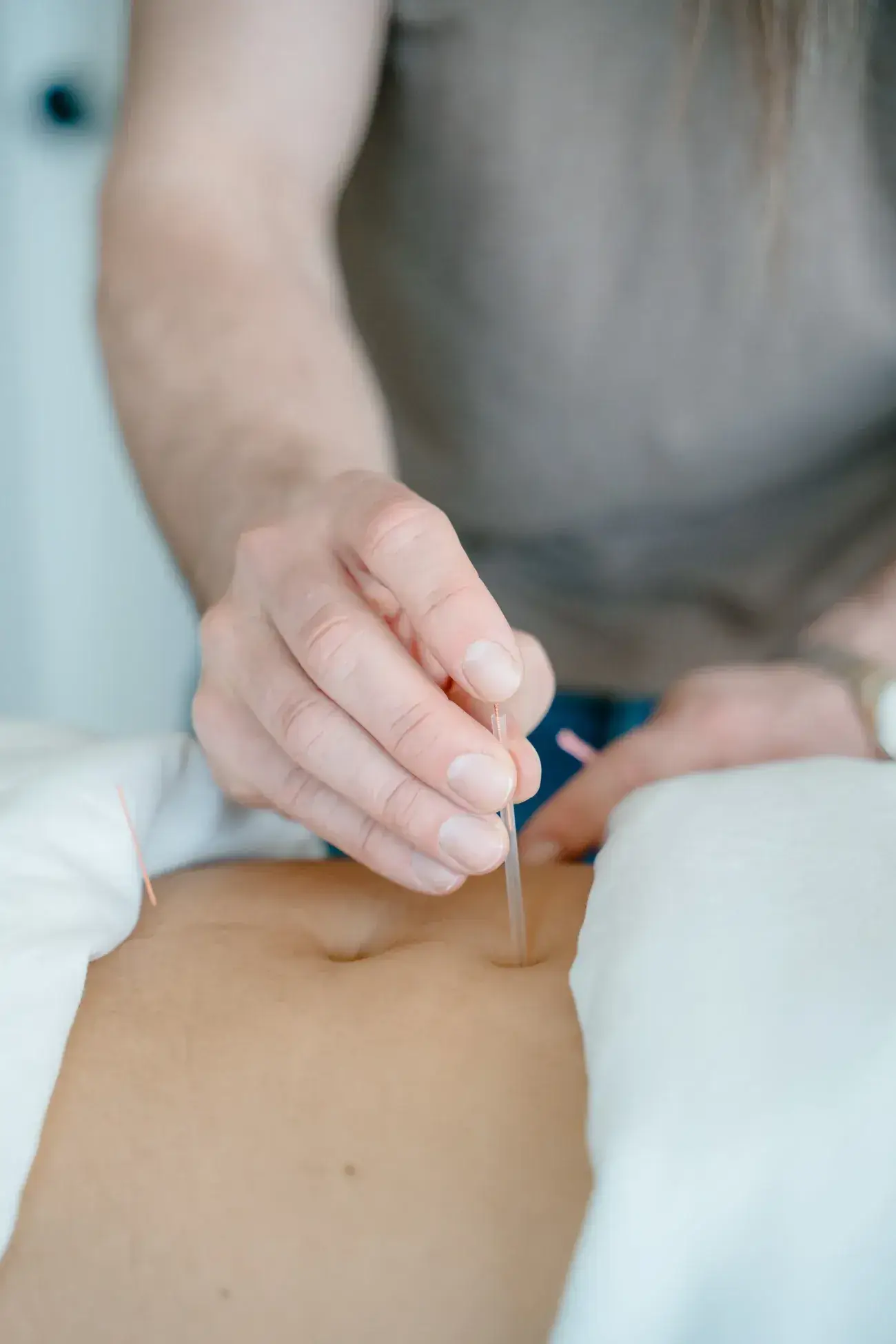
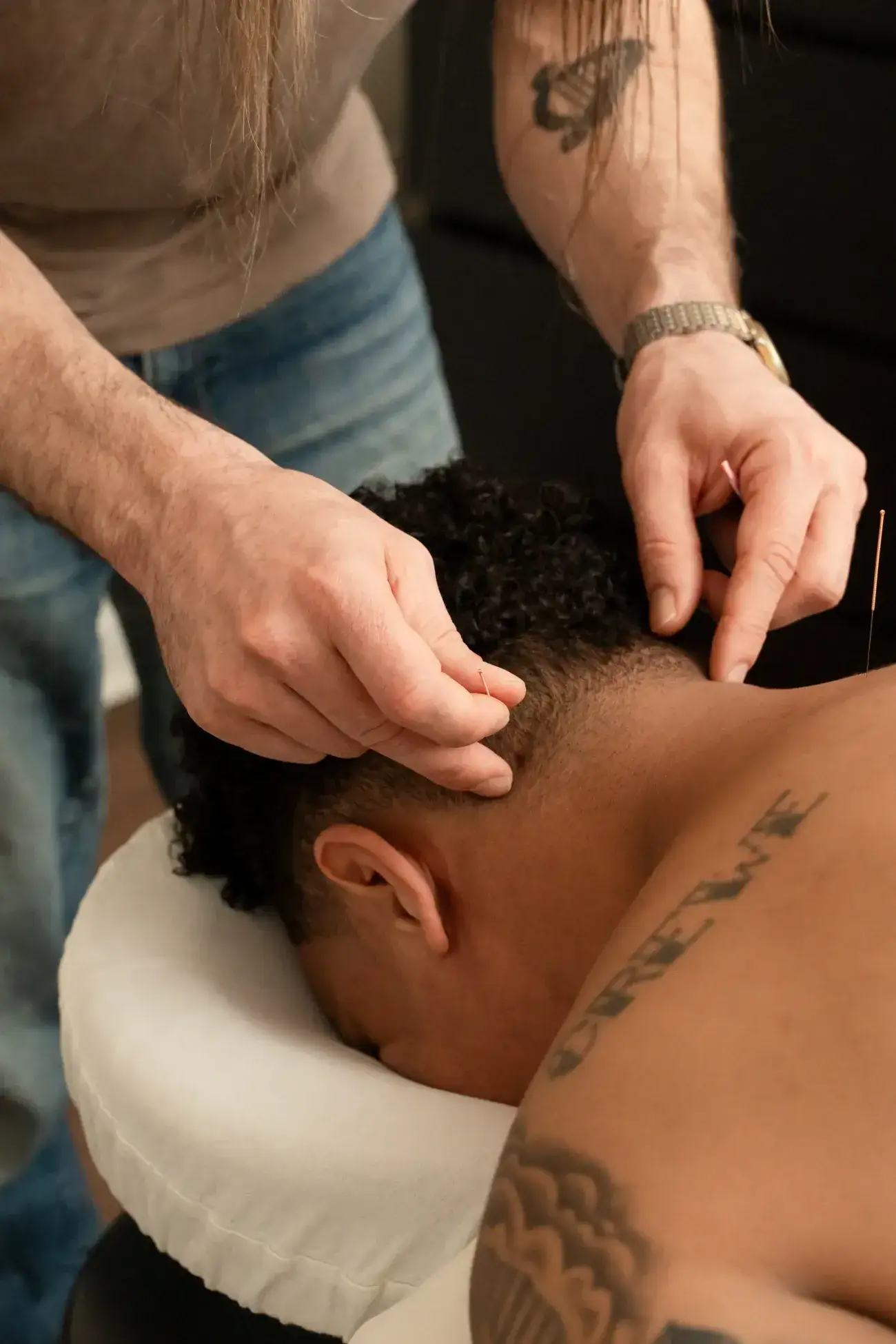
- points on the back of the neck and scalp, hands and legs, which is how acupuncture uses local, distal and ashi points
- slow, quiet positioning, avoiding drafts from fans or open windows
- your lead on what is tolerable that day
For the same reason, TMJ massage, especially the intra-oral kind, is usually not the right booking while attacks are active. Working inside the mouth and on the jaw muscles is exactly the kind of contact that can trigger pain.
How this works at Renu
If your doctor is on board, you would book with Dr. Will Tanner, our acupuncturist (also an RMT). Your first visit is a 90-minute initial consultation and treatment ($150), followed by 60-minute return visits ($120) or 45-minute follow-ups ($85).
At the intake, tell Will which side is affected, which spots and actions trigger attacks, what medicine you take and whether you are in a flare or a quiet spell. A simple log of how many attacks you have each day, and how bad, gives you and your doctor a fair way to judge any change. If your face pain started after shingles rather than out of the blue, our page on acupuncture for postherpetic neuralgia is the closer match.
When to see your doctor first, or urgently
See your family doctor or dentist before booking if your facial pain has never been assessed, or if painkillers like paracetamol and ibuprofen are not helping.
Get urgent medical advice if:
- you have vision problems, such as double vision or loss of vision, or pain and tenderness at the side of the head or on the scalp, which the NHS flags as signs of a serious problem with face and jaw pain
- you cannot eat or drink because of pain; the NHS notes that becoming undernourished or dehydrated can make trigeminal neuralgia worse
- your pain pattern changes sharply, or you are younger than 40 with new facial nerve pain, since other causes need ruling out
- you have thoughts of suicide during severe attacks, which the NHS acknowledges can happen. Call or text 9-8-8, Canada’s Suicide Crisis Helpline, any time, or 9-1-1 if you are in danger.
Never stop carbamazepine suddenly, even if acupuncture seems to be helping.
Questions people ask
Is trigeminal neuralgia the same as TMJ pain?
No. Trigeminal neuralgia is a nerve pain that strikes in sudden electric-shock attacks lasting seconds to about two minutes, often set off by a light touch or a breeze. TMJ disorder is usually an aching pain around the jaw, ear and temple, often with clicking and worse with chewing. The treatments differ, so the diagnosis matters.
Can I have TMJ massage if I have trigeminal neuralgia?
Usually not during an active phase. Intra-oral TMJ massage works inside the mouth and on the jaw muscles, exactly where light touch can set off an attack. If a doctor has confirmed you have both conditions, talk with your doctor first, and we would plan any jaw work only in a quiet period and only with your agreement.
Can acupuncture let me come off carbamazepine?
Nobody should promise that. The trials compared acupuncture with carbamazepine but were low quality, and the NHS says carbamazepine should only ever be reduced slowly, over days or weeks, on a doctor's advice. If your pain eases, raise any change with your doctor.
Why does wind trigger my face pain?
The NHS lists wind, even a slight breeze or air conditioning, among the common triggers, along with talking, chewing and vibration from walking or riding in a car. On gusty Calgary days, a scarf or high collar that keeps moving air off the trigger zone is a simple thing to try.
Sources
- NHS: Trigeminal neuralgia
- NHS: Trigeminal neuralgia, symptoms
- Ang L et al., Complementary Therapies in Clinical Practice 2023: Acupuncture for the treatment of trigeminal neuralgia, a systematic review and meta-analysis
- Hu H et al., Complementary Therapies in Clinical Practice 2019: Acupuncture for primary trigeminal neuralgia, a systematic review and meta-analysis
- Liu H et al., Alternative Therapies in Health and Medicine 2010: A systematic review on acupuncture for trigeminal neuralgia
- NHS: Temporomandibular disorder (TMD)
- 9-8-8 Suicide Crisis Helpline (Canada)
Page reviewed October 5, 2026. This page is education, not a diagnosis. For your own situation, talk to your doctor, surgeon or care team, or ask us.
Keep reading
Related pages